


Kapitel 1: Referee Foundations
Lesson 1: Referee Roles

Learning Outcomes
- Explain the role of the Head Referee.
- Explain the role of Scorekeeper Referees.
- Identify how referees work with other event volunteers.
- Describe how referees support fair and consistent competition.
- Identify what official resources are used to support referee decision-making.
Referees help VEX V5 Robotics Competition matches run safely, fairly, and consistently. In this course, you will learn about two referee roles: Scorekeeper Referees and Head Referees.
These roles are connected. Scorekeeper Referees focus on observing the match, evaluating scoring statuses, and recording accurate results. Head Referees build on that foundation by confirming scores as needed, making final gameplay rulings, and determining whether rule violations affect the outcome of a match.
The Scorekeeper Referee Role
Scorekeeper Referees help ensure that match results are recorded accurately and that the field runs smoothly from one match to the next.
Scorekeeper Referees are responsible for:
- Confirming the field is ready before a match
- Observing gameplay from their assigned position
- Watching scoring actions and scoring statuses
- Recording match scores
- Communicating when scoring is complete
- Alerting the Head Referee to possible rule concerns or close scoring questions
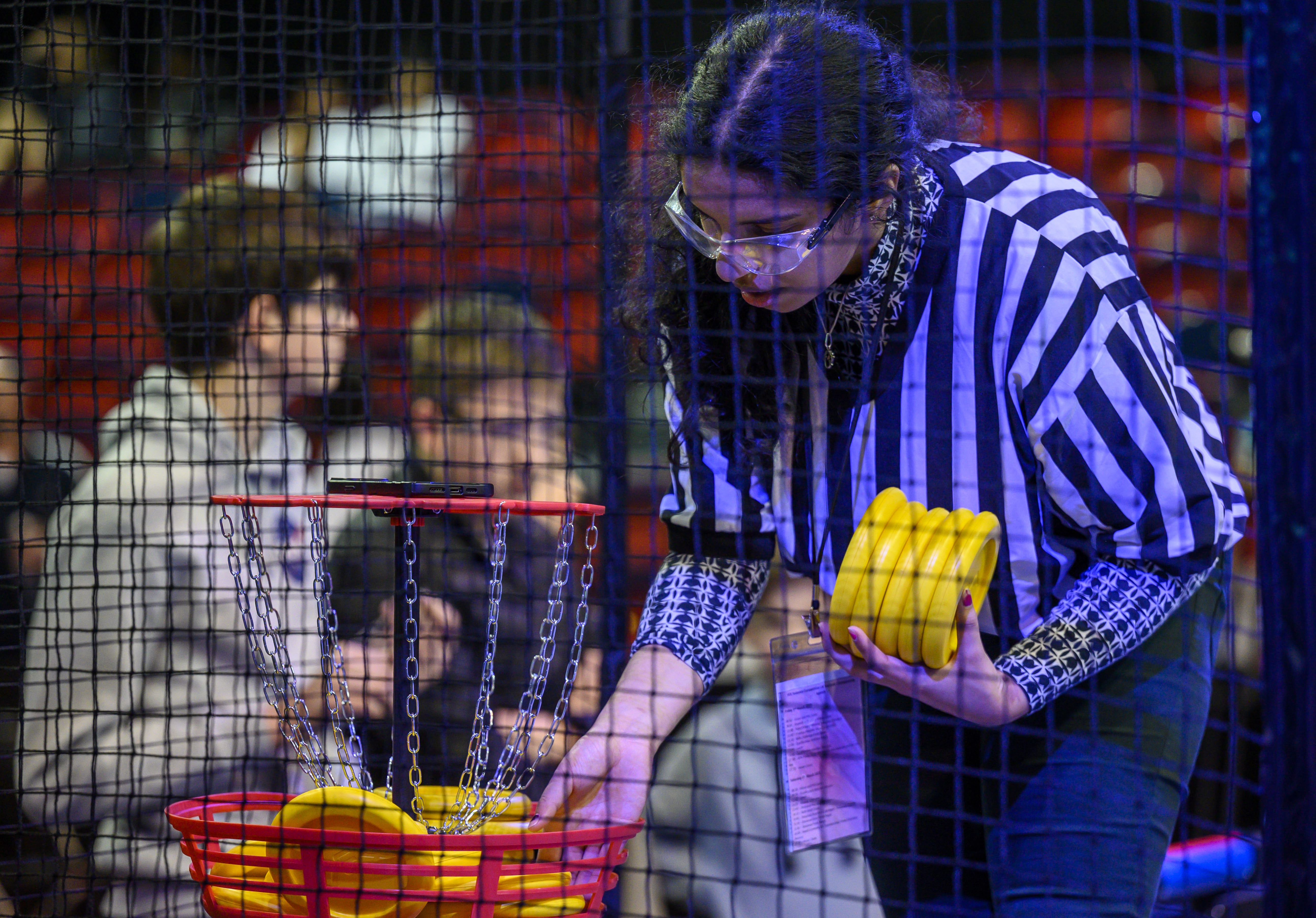
Scorekeeper Referees are important extra eyes on the field, especially during fast-paced matches. They may share what they observed with the Head Referee, but they do not make final gameplay rulings, determine Violations, or resolve rule disputes with teams.
If a team has a question about a ruling, score, violation, or penalty, the Scorekeeper Referee should direct that question to the Head Referee. This keeps communication consistent and helps prevent conflicting explanations.
The Head Referee Role
Head Referees are the primary authority for gameplay rulings during an event. This includes rulings about:
- Match play
- Scoring questions
- Violations and penalties
- Robot interactions
- Rule interpretations during matches
Because Head Referees make final gameplay rulings, they must understand the scoring process. Scores are not separate from rule enforcement. Head Referees may need to confirm scoring statuses, review final match results, and use scoring information to determine whether a violation was Match Affecting.
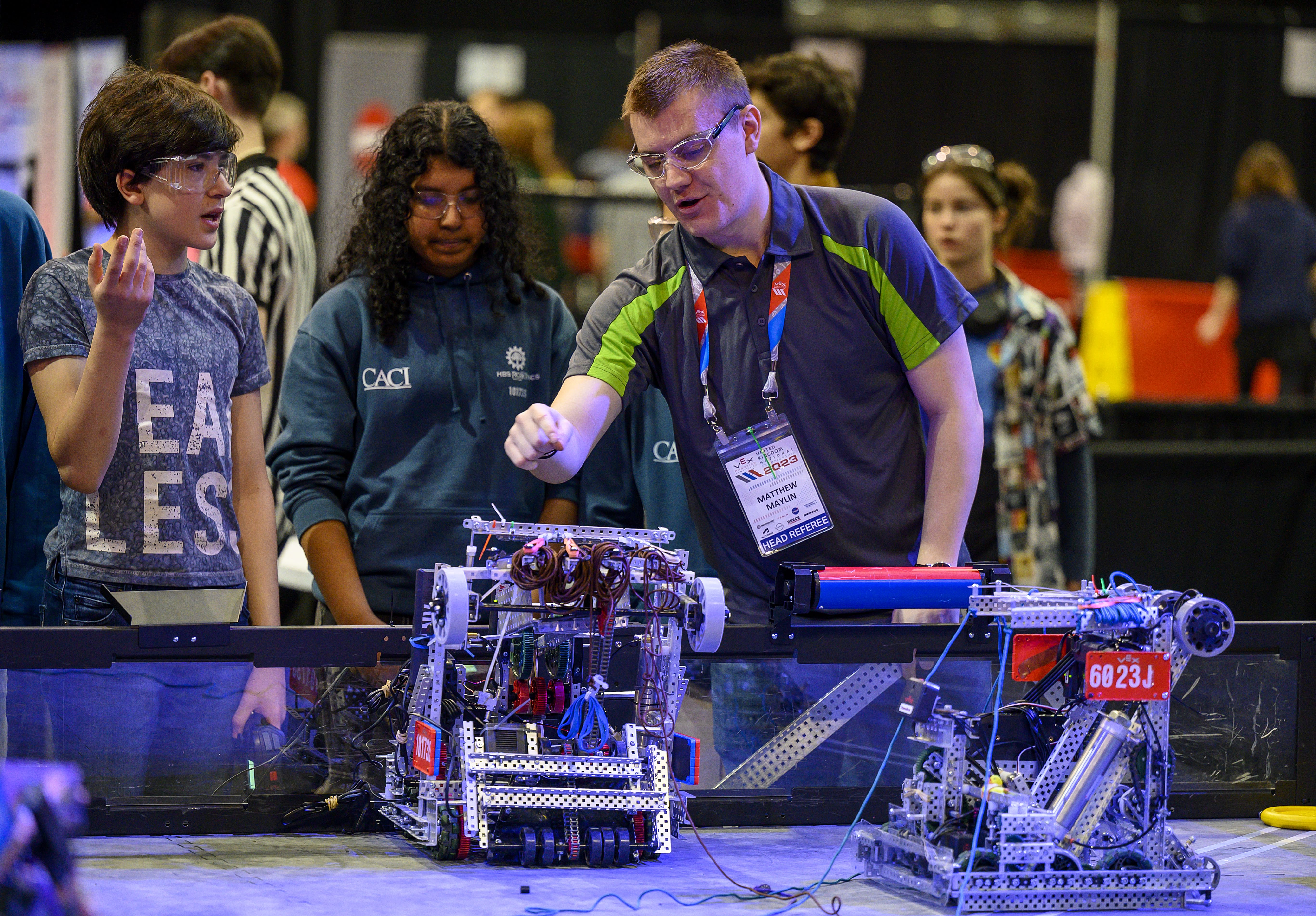
In this way, the Head Referee role builds on the Scorekeeper Referee role. A Head Referee needs the same scoring knowledge expected of Scorekeeper Referees, plus the authority and responsibility to apply rules, resolve disputes, and make final decisions. This role requires more than knowing the rules. Head Referees must apply rules as written, communicate clearly with teams and volunteers, and make decisions that support the integrity of the competition experience.
When explaining a ruling, the Head Referee should be able to identify which rule or rules apply and how they affected the final decision. Personal opinions, unofficial interpretations, rules from previous seasons, or assumptions about how a rule “should” work should not be used when making decisions.
Working with Other Event Volunteers
Referees work closely with the Event Partner throughout an event. The Event Partner oversees overall event operations, including scheduling, staffing, venue management, and coordination across volunteer roles. The Head Referee is responsible for gameplay decisions and rule enforcement on the field.
Strong communication between the Event Partner and the referee team helps the event run smoothly. For example, referees may need to communicate when a field is ready for teams, when scoring is complete, or when an issue may affect the event schedule.
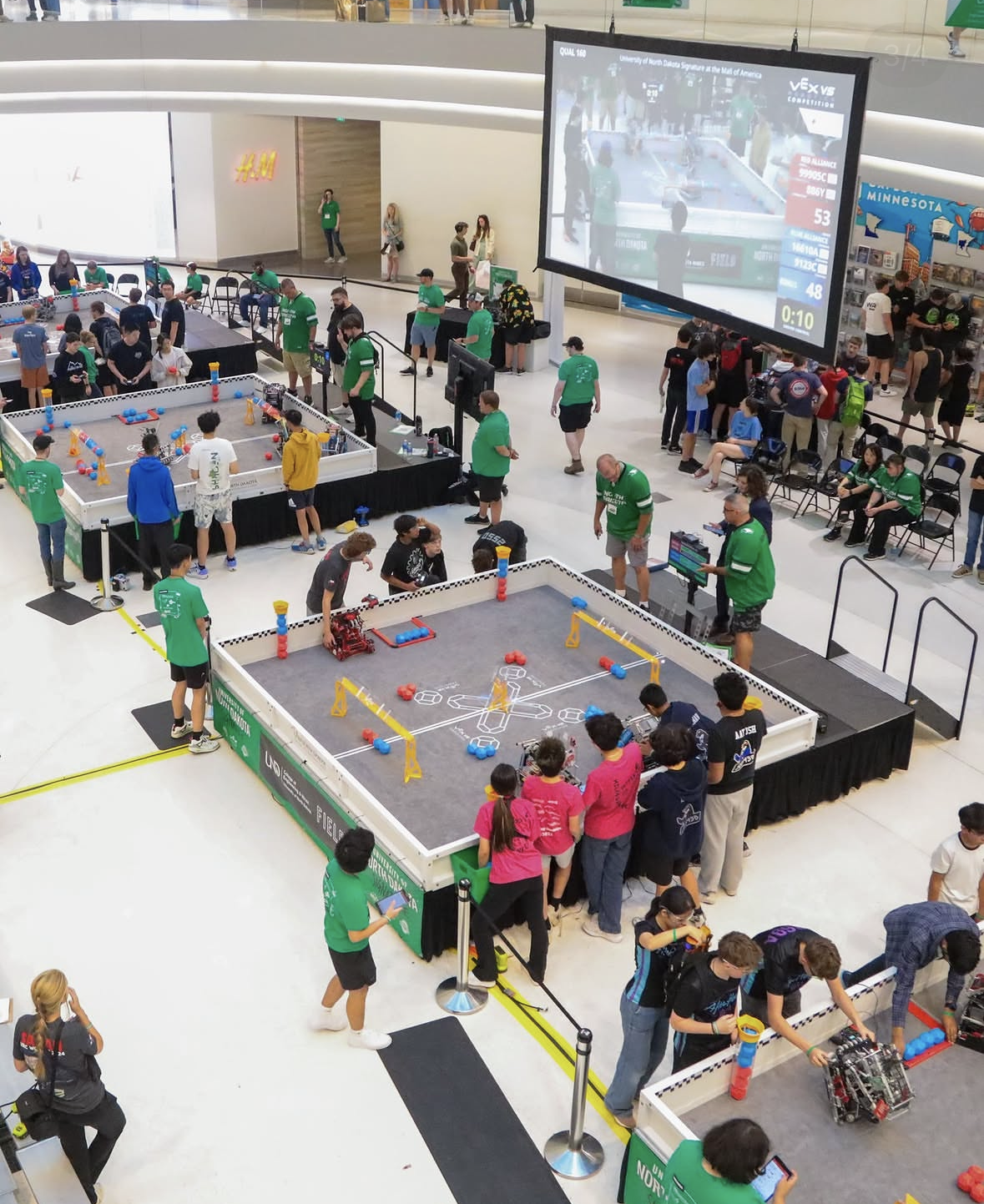
Referees also interact with other event volunteers, including Tournament Manager operators, field reset volunteers, robot inspectors, and queuing volunteers. These volunteers support different parts of the event, but they all depend on clear and timely communication from the referee team. When referees communicate clearly, matches can move efficiently while still giving scoring questions, close calls, and safety concerns the attention they need.
Supporting Fair and Consistent Competition
Fair and consistent competition depends on the full referee team. All referees need to watch the field carefully, understand how scoring is evaluated, communicate clearly, and apply the same standards from match to match.
Scorekeeper Referees support this work by evaluating scoring statuses at the end of a match, recording scores accurately, and sharing relevant observations with the Head Referee. Head Referees also rely on these same skills, but carry the additional responsibility of confirming those final scores, resolving close calls, applying rules, and making final decisions about gameplay rulings, violations, and penalties.
VEX V5 Robotics Competition Matches move quickly, and referees will not see every interaction perfectly. Consistency matters. Referees should not tighten or loosen standards because a match is later in the day, part of Elimination Matches, or drawing a strong reaction from the crowd. Consistent scoring and rulings help teams understand expectations, adjust their gameplay, and trust that matches are being called fairly.
Using Official Resources
Referees should use official resources when preparing for an event and when making decisions during an event. The current VEX V5 Robotics Competition Game Manual is the official source for rules, scoring, Robot requirements, tournament procedures, definitions, and event expectations. The latest version of the manual can always be found on the V5RC page of competition.vex.com.
The Game Manual is a technical reference document, not a textbook, strategy guide, or replacement for referee training. It is detailed, but you are not expected to read it cover-to-cover in one sitting. Instead, use it as a reference guide. Throughout this course, you will be directed to specific sections of the Game Manual that connect to the concept you are learning.
The Game Manual is organized into sections with different purposes:
- Definitions explain the meaning of key terms.
- Scoring Rules explain how points are earned and evaluated.
- Specific Game Rules explain what robots and Drive Team members may and may not do in this year’s game.
- Safety Rules explain expectations that help keep participants, volunteers, robots, and Fields safe.
- General Rules and General Game Rules explain expectations that apply across the competition.
- Robot Skills Rules explain how Robot Skills Matches are played and scored.
- Inspection Rules explain robot construction and inspection requirements.
- Tournament Rules explain how events are run and how teams are ranked.
- Appendices provide supporting information, including Field details, definitions, Violation guidance, and team classifications.
Many referee decisions require connecting information from more than one place, so pay attention to rule references, definitions, notes, and related sections. The official Q&A system, hosted on events.vex.com, is the other official source for rule clarifications from the Game Design Committee and should be used alongside the current Game Manual.
As you move through this course, you will practice using the Game Manual as a working reference so you can prepare for events, answer questions, evaluate scoring, and apply rules consistently throughout the season.