


Chapter 2: Match Play at a Qualifying Event
Lesson 1: Match Play at a VEX IQ Competition Event

Learning Objectives
- Explain the purpose of Qualification Matches at a VEX IQ event.
- Identify the minimum team count and minimum matches per team required for a qualifying IQ event.
- Identify the personnel and materials required to run one IQ competition field.
- Describe how VEX IQ teams advance from Qualification Matches into Finals Matches.
- Identify that the Teamwork Champion awards are determined by finals results at a VEX IQ event.
A VEX IQ Robotics Competition event day has two acts. Qualification Matches fill most of the hours and produce rankings. Finals Matches close the day and decide the event's Teamwork Champions.
Qualification Matches
Both acts of the day are built from the same kind of match. In a Teamwork Match, two teams form an Alliance and play the field together for one minute. There is no opposing Alliance. They build one score, and both teams earn it.
Qualification Matches are the Teamwork Matches that produce rankings. Every team is guaranteed the same number of them, and nobody is eliminated along the way. A team that scores badly in its first three matches plays the rest anyway. They came for a day of robotics and testing their skills, not for three matches.
Nobody picks the pairings for an Alliance, including the Event Partner. The event software randomizes them, so a team plays alongside several different partners across the day and meets most of them that morning. That is part of the challenge, and it is why your venue fills up with pairs of students crouched over a notebook between matches, working out who is doing what.
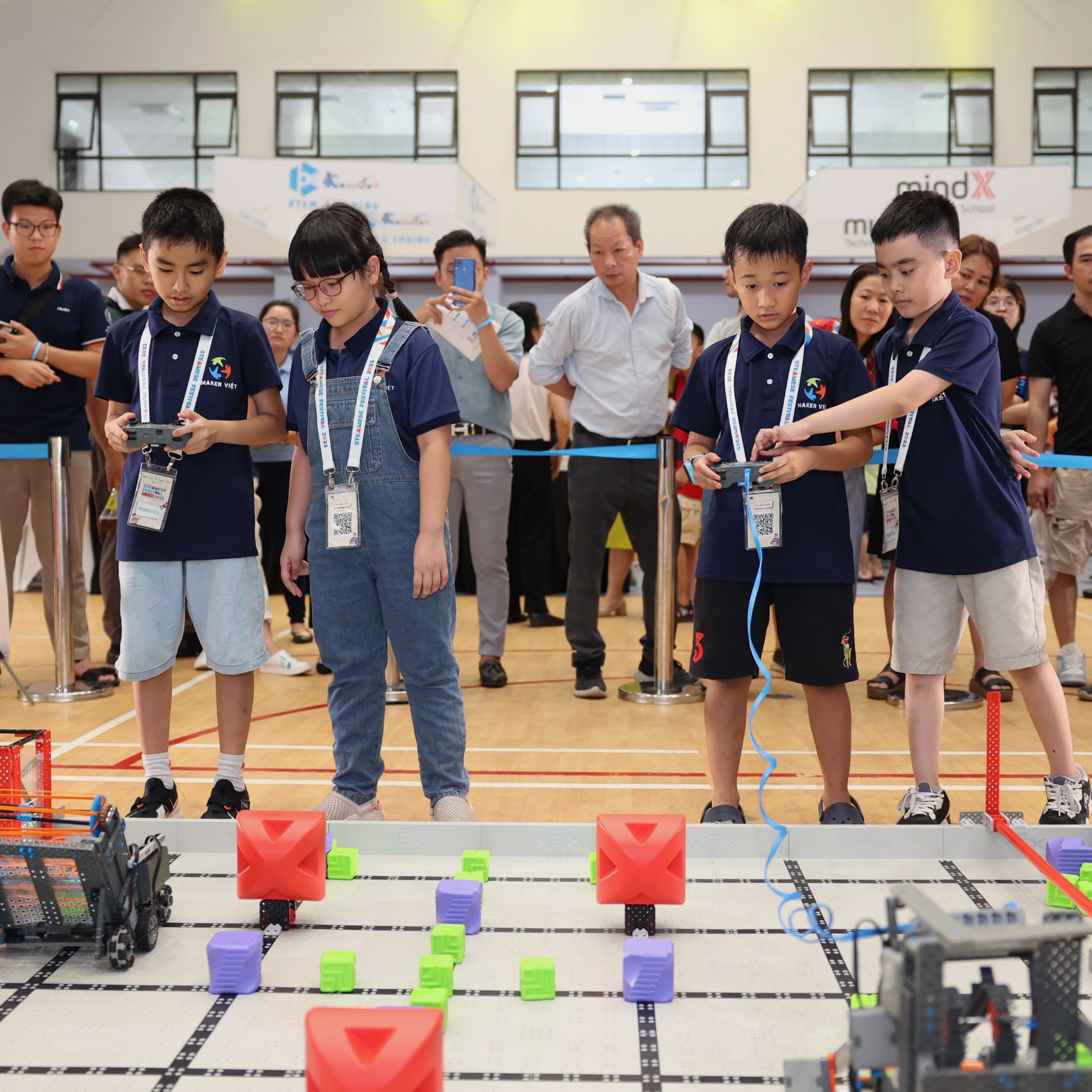
Up to three students from each team go to the field: two Drivers and a Loader, who introduces Bean Bags into play. The Drivers hand off the controller partway through, so both of them drive every match. Adults stay out of the field area during a match.
What a Qualifying Event Requires
While the words qualification and qualifying get used in the same breath all season, they mean different things. A Qualification Match is a single match a team plays. A qualifying event is the kind of event you're hosting — one approved to advance teams to the next level. Running enough Qualification Matches is part of what makes an event a qualifying event.
Two of the qualifying event requirements you met in Chapter 1 directly impact Qualification Matches:
- At least 16 registered teams.
- At least 6 Qualification Matches per team.
Those two numbers set the size of your day. Sixteen teams playing six matches each is 96 team appearances, and with two teams on the field at a time, that's 48 matches. Chapter 4 will cover more about how the number of teams and number of fields impact your schedule.
The Flow of a Match
The clearest way to see what a field needs is to watch one match go by.
Before the match starts, a Field Resetter has returned every Bean Bag to its starting position and confirmed the field is ready. The Queuer has walked this match's two teams over from the pits and has the next teams waiting nearby. Drive Team Members place their robots and take their positions beside the field, and the Emcee introduces the teams to the room.
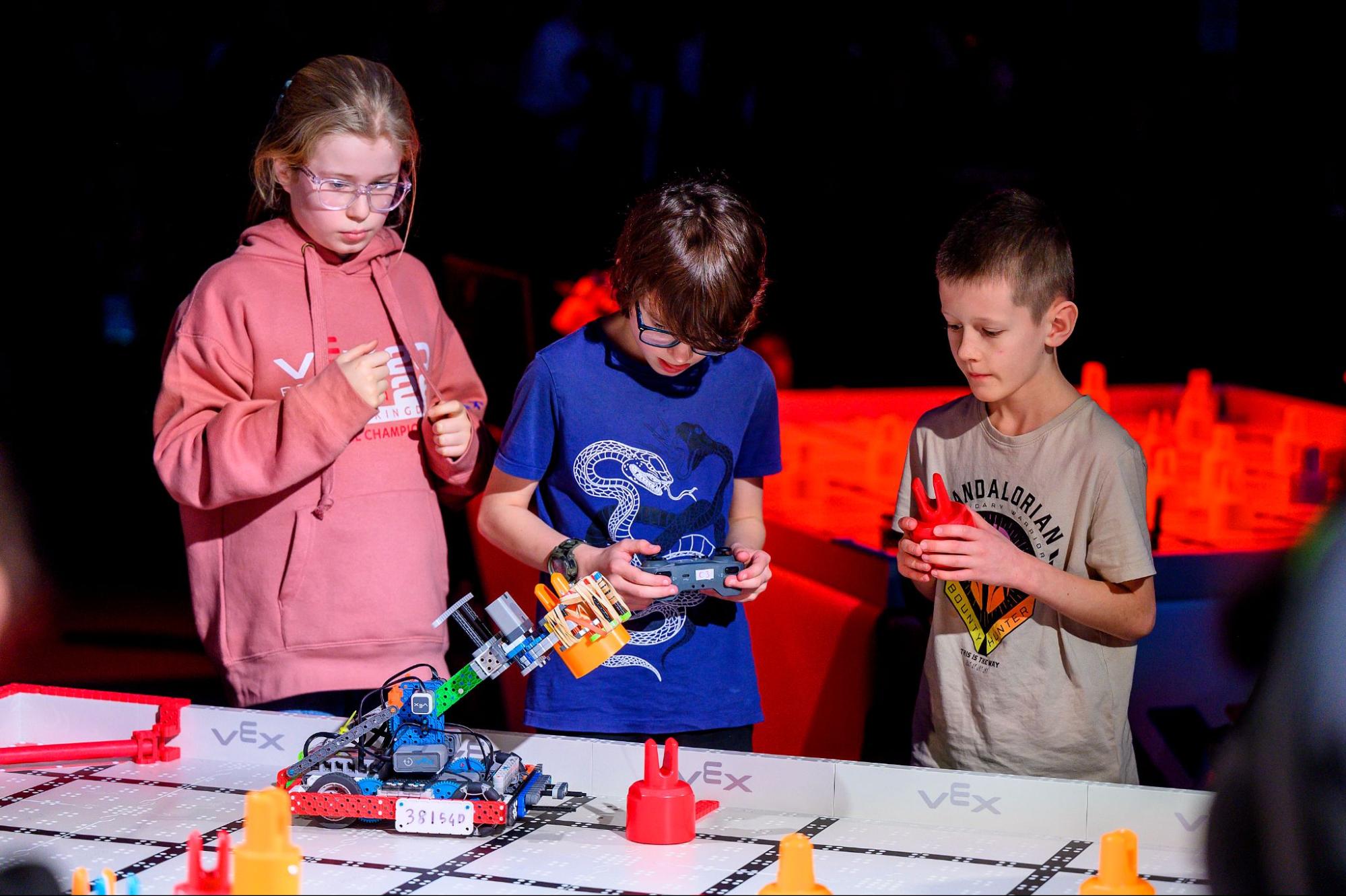
Then the match runs. The match timer governs it: drivers start when the clock starts, hand off the controller partway through, and stop when the timer reaches zero. Throughout, the Head Referee watches for rule violations while a Scorekeeper Referee watches what's being scored.
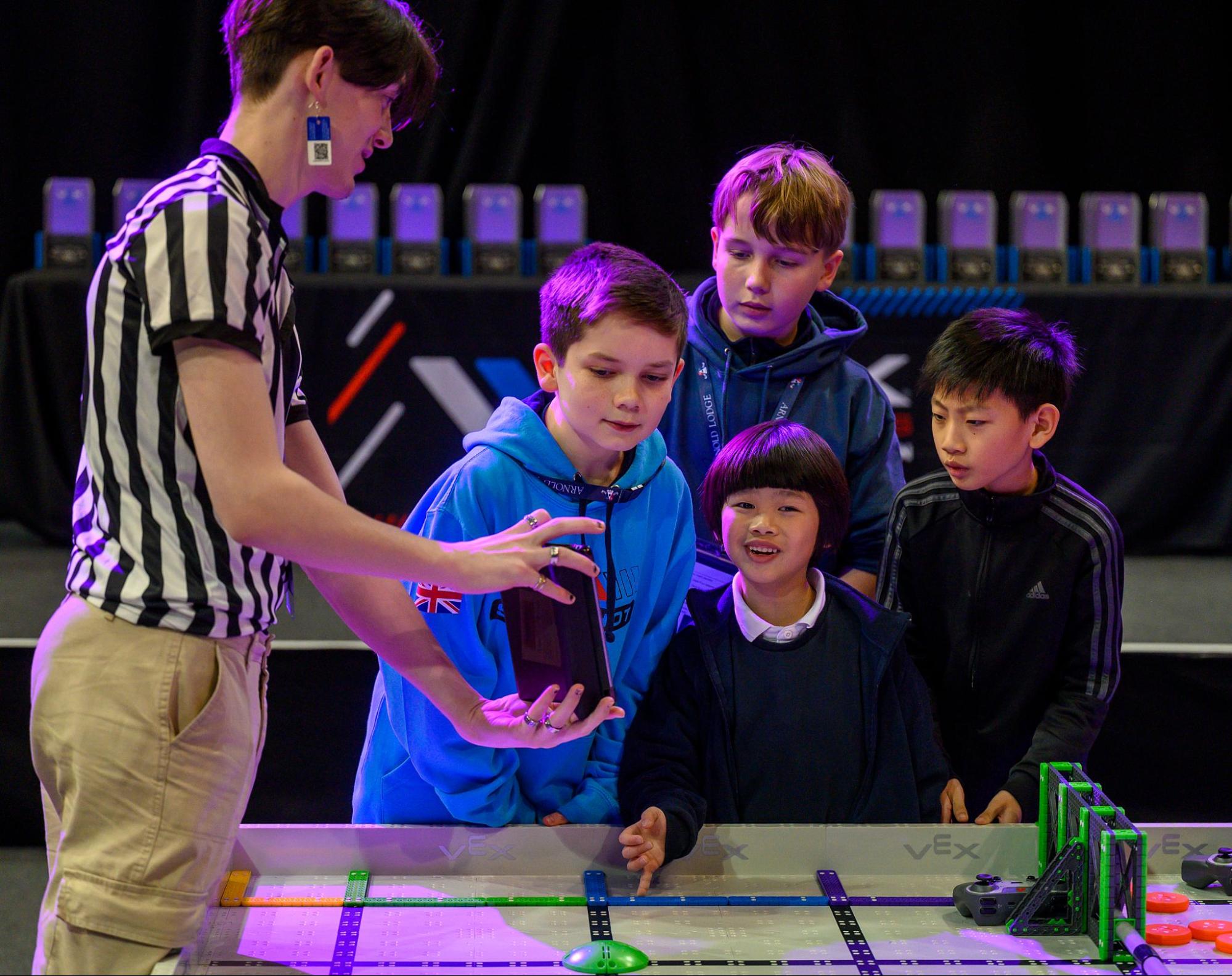
When time expires, the referees read the field and score the match. The score isn't official until it has been confirmed with the teams. Students who have a question about the score, or who want a ruling explained, stay in their Driver Station until the Head Referee has talked with them. That conversation belongs to the Head Referee: no other volunteer explains a ruling, and it's the students who ask, not their coaches. The Head Referee's decision is final. Once the score is settled, the Emcee announces the result, while the Field Resetter is already resetting for the next match.
Each VEX IQ Robotics Competition field needs:
- The volunteer roles listed above ,including a Head Referee, Scorekeeper Referee, Field Resetter, Emcee, and Queuer
- You will learn more about volunteer roles and planning in a later chapter.
- A competition field, built to the current game's specifications.
- A display showing the match timer, the teams playing, and the score.
If your event runs more than one competition field, they must be set up consistently with each other, including how high they sit off the floor.
Keeping Teams Moving
Queuing can be easy to underestimate. Teams are spread across the event at their pits, the practice field, and the Robot Skills line, and they may not appear at the field on their own. A queuer working two matches ahead absorbs the ordinary delays, like a team fixing a robot or a team that didn't hear the announcement, before those delays reach the schedule. Whether you run one competition field or two, a queuer who can stay ahead is what keeps your day on time.
Finals Matches
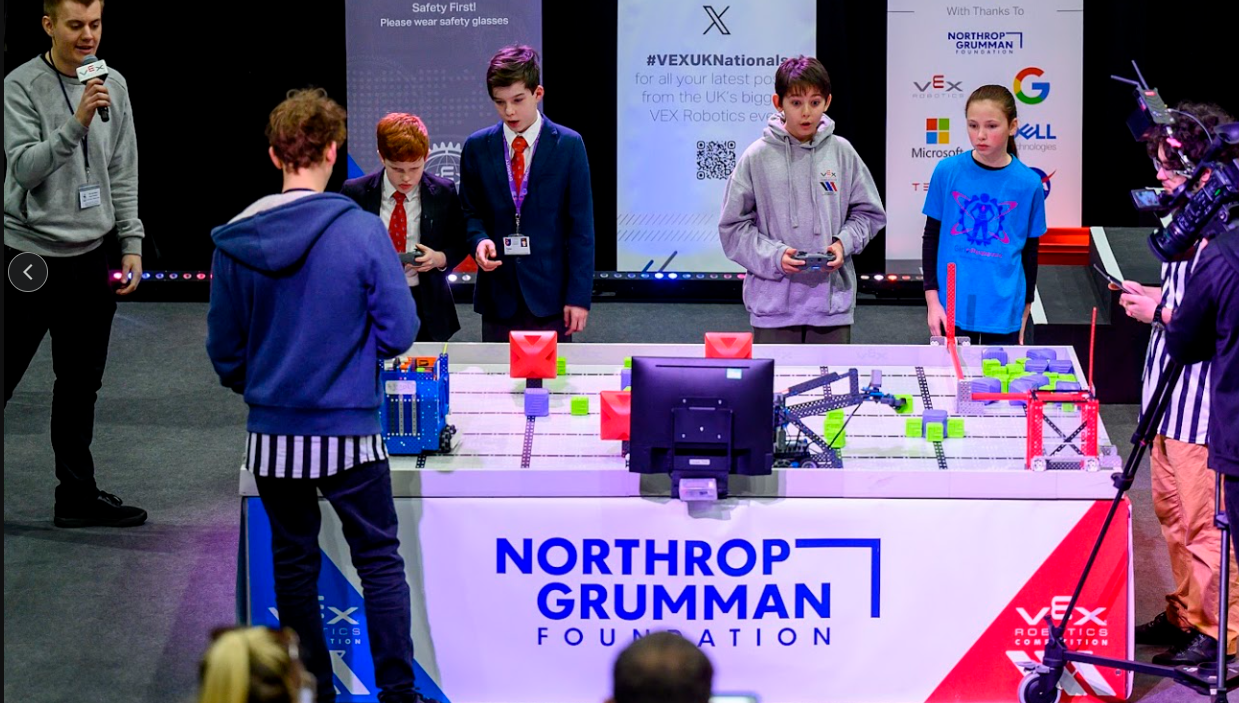
A Finals Match is a Teamwork Match — one Alliance on the field, one minute, one score. Nothing about the play or volunteer roles at the field changes from Qualification Matches.
How Teams Move from Qualifications to Finals
Teams' average Qualification Match scores determine if they play in Finals and who their Alliance partner will be. Each team drops their lowest Qualification Match score (or multiple depending on the number of matches played) before averaging so they can reflect their best performances of the day. Alliance pairings are matched so the first and second ranked teams are paired for Finals, third and fourth together, and so on.
The number of Finals Matches is determined by you, the Event Partner, unless you are running an event that qualifies directly for the VEX Robotics World Championship. The number of Finals Matches that will fit in your schedule depends on how the rest of the day has run and your total event time. Determining your schedule, including the number of Finals Matches, will be covered in Chapter 4.
Finals Matches at Your Event
Finals Matches run one at a time, starting with the lowest-ranked Alliance and working upward, at a pace deliberately slower than qualification. Ranking decides who plays and in what order. It does not decide the outcome: the Alliance that plays the first Finals Match can post a score no one beats, including the top-ranked Alliance playing last.
The two teams in the Alliance with the highest Finals Match score are the event's Teamwork Champions. Both teams share the award. It's a performance award, so winning it has no bearing on either team's eligibility for a judged award, and it's one of the awards that can carry a qualifying spot to the next level, as covered in Chapter 1.
The Rules Behind This Lesson
Everything in this lesson comes from the Event Qualifying Criteria and the VEX IQ Robotics Competition Level Up Game Manual in Section 5, The Event. You do not need to memorize the rules, but you should know they exist and where to find them when a question comes up on event day.
Review Rules <T1> through <T14> in the Game Manual to see how they connect to what you just learned about match play before moving on to the next lesson.