


Chapter 3: The Rest of the Event Day
Lesson 2: Adding Judging

Learning Objectives
- Describe what judging adds for the teams at your event.
- Identify which judged awards must be offered when judging is included.
- Explain how adding judging affects your volunteer count.
Match play is one way to see a team’s work in action. Judging is the other, and whether your event includes it is your call.
Judging does not reshape your event day schedule. It changes the number of volunteers needed, and it changes what awards teams can earn. This lesson covers both, and is designed to give you enough information to make an informed decision about whether to include judging in your event.
Note: Due to the volume of volunteers needed for judging, it is recommended that new Event Partners wait to add judging to their events until their second or third time hosting.
What Judging Is
A match shows you how a robot performed. It does not show who designed it, what the team tried before this version worked, or what the students learned getting there. Judging is how an event sees and recognizes that work.
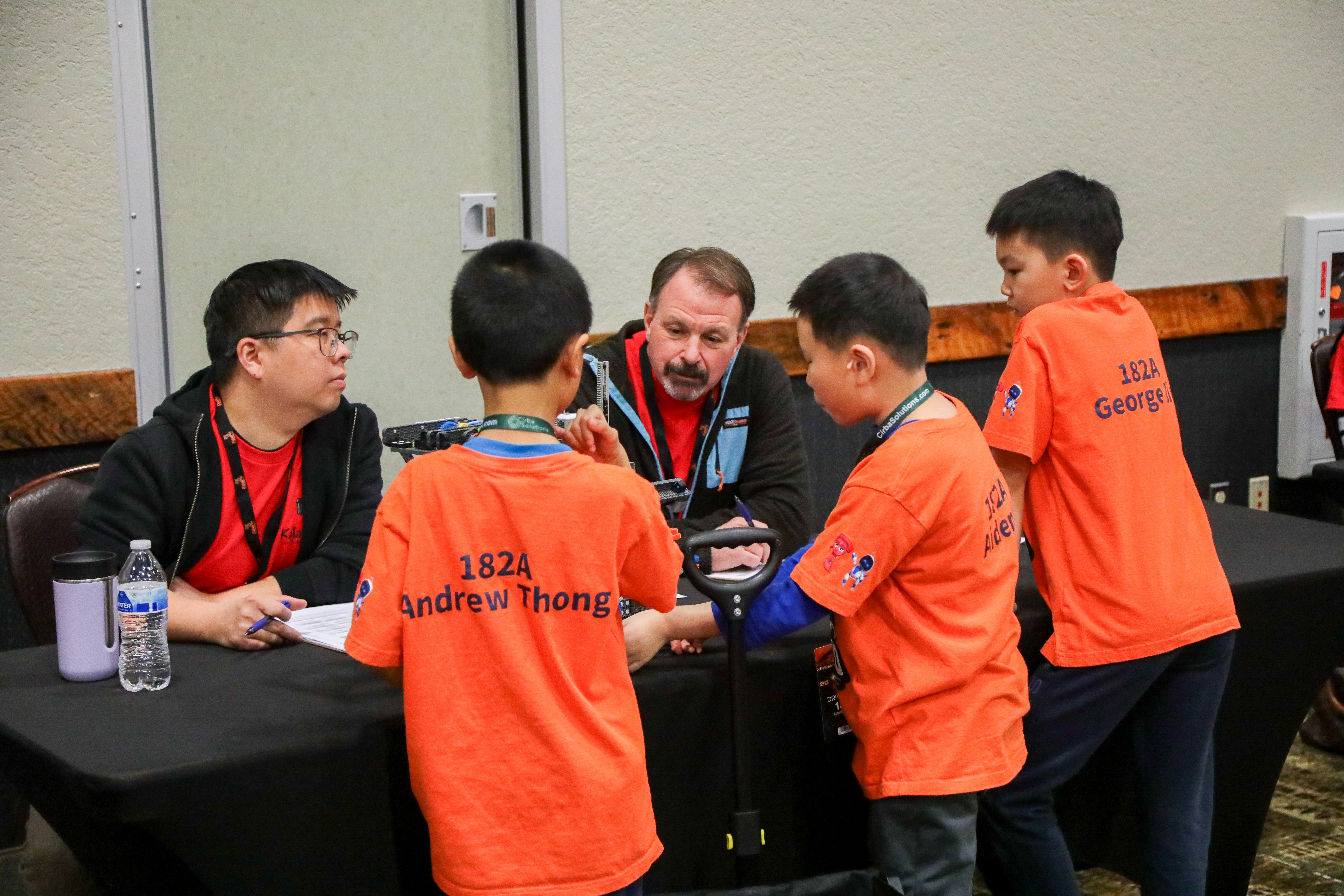
Judges review teams’ engineering notebooks and interview teams to hear and see their learning process. The engineering notebook is the record a team keeps of what it tries, changes, and decides. The interview is a short conversation in which students explain that work in their own words. Neither is a test. Both exist to give teams the opportunity to show judges the decisions, learning, and progress they made, which is what judged awards recognize.
Judging opens a category of recognition that does not otherwise exist at your event. Without it, everything a team can win comes from what happens on the field. With it, teams can also be recognized for the design work behind the robot, the record they kept along the way, and how clearly they can explain their own thinking.
Judged Awards also carry advancement opportunities. An event that offers no judged awards receives a maximum of two qualifying spots, awarded to the champion alliance (Teamwork or Tournament Champions).
If your qualifying event includes judging, you must offer three awards at minimum: the Excellence Award, the Design Award, and the Judges Award. You may also add others depending on what you want to highlight. The Award Descriptions article explains what each award recognizes.
Judges decide which teams win awards by evaluating notebooks and interviews with official rubrics, and the judging process is overseen by a certified Judge Advisor. This means that you don’t have to know how to judge yourself, you just need to support the volunteers who are doing it.
How Judging Impacts Your Event Planning
Adding judging does not change the time or schedule of your event. The largest impact is the number of volunteers you need to have at your event. In terms of event planning, it comes down to three things: people, a space, and physical awards.
- People — Your job is to recruit the necessary volunteers to fill the roles involved in judging. You will need:
- A Certified Judge Advisor, secured before you post your event
Approximately two judges per 8-10 teams in attendance
Your Judge Advisor will organize judging at your event. They will handle scheduling interviews, briefing the judges, leading deliberations, and keeping judging moving throughout the day.
- Space — A quiet, private area where the judges can deliberate, away from teams and spectators. Interviews do not need a private room of their own, as they happen in public spaces like the pit area. Every team has to be given the opportunity to be interviewed, and most often judge pairs will meet a team in their pit.
- Awards — Every award you offer needs something to put in a team's hands. Each award you add is another trophy or certificate to prepare. (You will learn more about awards and the Awards Ceremony in the next lesson.)
Event Partners do not have a voice in judging deliberations. Your job as the Event Partner is to provide judges with the space and materials to make a decision, including generating reports as needed to help judges ensure the Excellence Award criteria are met. Your Judge Advisor facilitates judges’ decision-making, to make sure that awards are decided fairly and impartially.
Remote Judging
Judging does not all have to happen in person, on event day. Remote judging moves either Engineering Notebook evaluation, Team Interviews, or both into the weeks before your event, with interviews held over video. It works best when scheduled close to the event, within about two weeks. Remote judging generally involves additional volunteers to serve as judges, to ensure that all teams are interviewed and have their notebooks reviewed by multiple judges in time for the event.
With remote judging, teams are evaluated against the same rubrics and the same criteria as in-person. The things judges learned during their remote activities contribute to their deliberations in the same way as when completed during the event day.
The choice between remote or in-person judging is yours to make, together with your Program Support Team. The main thing to remember is that whatever judging format you choose applies to every team — if notebooks are judged remotely, all notebooks are, and the same holds for interviews. Before you choose remote, consider whether every team registered for your event could take part on equal footing: reliable internet, a device, a workable space, and a time that fits their schedule. If any team might not have access, or if you are not sure, judge in person. One of the commitments in the Code of Conduct is Fairness. All teams need to have the same fair access to judging regardless of circumstances beyond their control.
Read Remote Judging to learn about all of the specifics, including the youth protection considerations and additional logistics your Judge Advisor will have to work with before making your decision.
Making the Call
Many local qualifying events include judging, and many also run without it. What makes the difference is the volunteers you can bring together, and what you want the day to offer for teams.
Whether or not to include judging is not a decision you should make on your own. Your Program Support Team knows what teams in your region look for, which awards carry advancement opportunities for your event, and what other events near you are offering, and they can help you figure out if judging is a good fit for the event you are planning. Talk through the decision with them before you post your event. Including judging adds a few additional elements to include in your event posting. You will learn about those in Chapter 4.