


Chapter 4: Planning Your Event
Lesson 2: Staffing Your Event

Learning Objectives
- Describe how to match each volunteer to a role that fits their strengths, comfort, and availability.
- Determine which roles require certification, which need preparation, and which can be learned on event day.
- Identify that all volunteers at an event must adhere to the Youth Protection Policy and Code of Conduct.
Once you know when and where your event will be held, you can start asking for volunteers. You cannot run an event without volunteer staff, and building a pool of capable volunteers is one of the most impactful things you can do to make your future events go smoothly. Volunteers can range in age, experience, and backgrounds, but all have one thing in common — they want to support the students and teams at your event.
It is your job as the Event Partner to set up your volunteers for success. Understand the different volunteer roles and their requirements and responsibilities, and then think about how to pair someone with the role that is a right fit for them. Not only will that help you now, but it will also help build your capacity over time. A returning volunteer who already knows your event is one of the most valuable people on your list, and giving your volunteer crew a positive first experience is the first step.
- Read Volunteer Roles at a Local Event before you begin to learn what all of the volunteer roles are. The article presents the volunteer catalog, including what each role does, requirements for who can fill it, and how many of each are recommended.
- Read Recruiting Volunteers for Events to learn about where to find people and how to ask.
How Many People You Need
The volunteer roles article catalog lists roles, not necessarily people. One volunteer can hold multiple roles when they are running at separate times or when they happen in the same place. Combining roles can help you leverage your volunteer pool to meet your needs. Consider the following when recruiting:
- Your Head Referee can lead Inspection, and can also train Scorekeeper Referees the morning of the event.
- Check-in ends early in the day before matches start, so a check-in volunteer can become a queuer once all teams have arrived.
- Scorekeeper Referees can help reset the field between matches. Students and siblings of team members attending the event also make great field resetters.
- Robot Skills needs a volunteer who can score matches, but practice fields do not necessarily need a volunteer stationed there unless you have extra people.
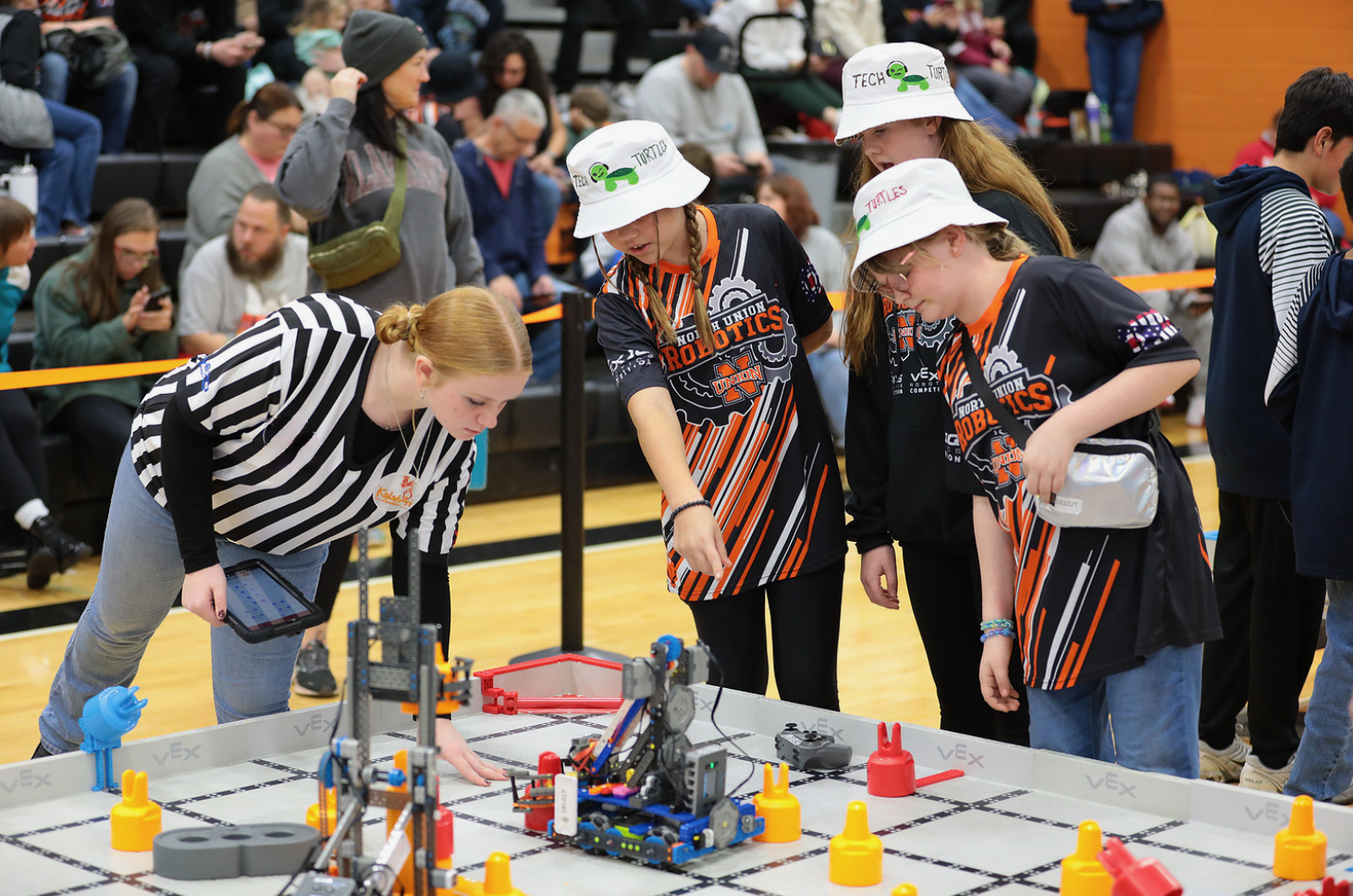
Every additional volunteer beyond your basic list gives you extra breathing room. For instance, an additional person lets you put someone at the practice fields, adding an extra person at each competition field can speed up field reset or scoring, having a second person help with the software means they can learn about how it runs, and help keep things moving smoothly throughout the day.
More people does not necessarily make for a “better” event, but it will definitely be more for you to manage. Running a first event with a small, capable team of volunteers can help everyone have a good experience that you can build on for future events.
Putting People in the Right Places
A name on a list tells you someone is willing to help. It does not tell you what their event-related strengths are, and many volunteers will be learning about the event and their role on the day. Spending time thinking about what each role needs, outside of just the listed requirements, can help you pair volunteers with the roles they are best suited for. Consider the following:
- How physical the role is — Field reset, queuing, and emceeing need someone who is moving and energetic for the whole day. Check-in, running the software, and scoring at a skills field can be done sitting down. Keep the more active roles for active people when planning.
- How long they can stay — Check-in and inspection both finish soon after the last team arrives, which makes them the right fit for someone with a smaller availability window. A volunteer who is able to be there all day may be better suited to a job at a competition field.
- Are they used to working with kids — Referees and judges interact and communicate with students consistently throughout the event. They need to be comfortable and patient with the teams at the event. Teachers, librarians, and anyone who coaches a youth sport can be a great volunteer for these roles. In addition, the emcee is communicating spectators and coaches as well as the students at the field. They need to be confident and clear in their communication throughout the event.
- Can they remain calm under pressure — Inspectors and referees have to tell teams when something is going wrong. Both are roles well suited to a volunteer who can deliver a decision kindly and clearly and then move on. The volunteer running the event software needs to adapt to changing situations at the event to make sure that the match schedule stays on track. The people you're looking for in these roles tend to be calm, rather than loud.
- How familiar they are with VEX Robotics Competitions — Putting a returning volunteer next to a first-timer can help ease new volunteers into their role in a supportive way. It also allows you to delegate training volunteers to another capable repeat volunteer. If you have someone who has been a successful volunteer previously, lean on that experience, and try to spread it around if possible.
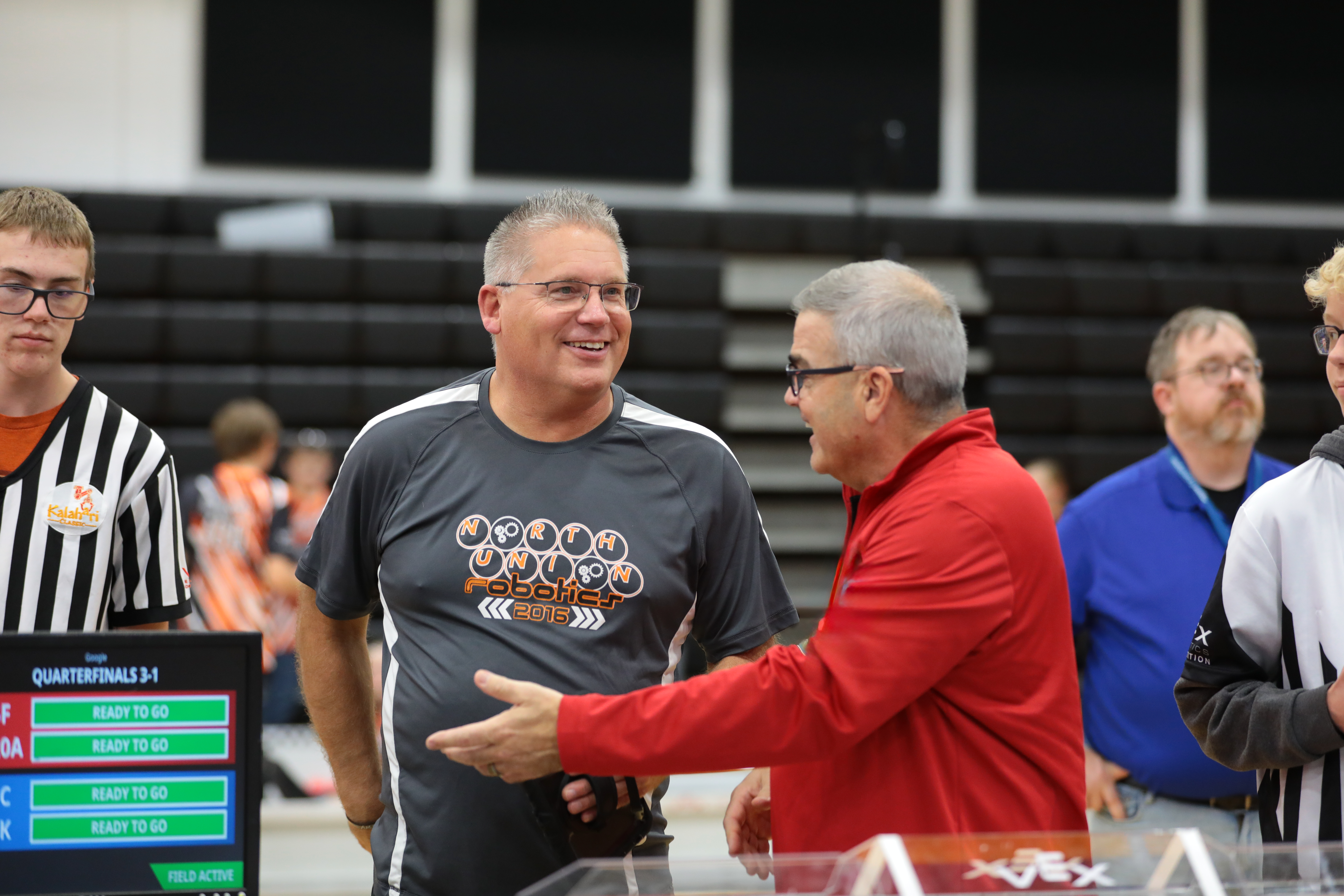
Remember to leave yourself unassigned, because you're the one who covers breaks and emergencies, and handles the event at a high level.
Rules That Apply to Every Volunteer
A few things shape who can volunteer, and what roles they can fill. Keep these in mind both when recruiting and when planning your day.
Policies
Remember that the Code of Conduct applies to everyone in the building at an event. Be sure that volunteers know the Commitments and are willing to adhere to them in all interactions. Part of the Commitment to Fairness includes disclosing conflicts of interest. This protects your volunteers as much as your teams. Someone whose own team is competing should not judge or score that team's matches, because every decision they make would be questioned no matter how carefully they made it. That still leaves many other jobs at your event open to them. The Event Partner, Head Referee, and Judge Advisor must be three different individuals for the same reason.
The Youth Protection Policy is how Global Robotics keeps students safe at events, and it applies to every adult in a role at your event — volunteers, officials, and you. Read the policy before you recruit rather than after so you are aware of all of the protections and requirements.
Certifications
Certification exists so that teams get the same experiences at your event regarding match play and the judging process. Two volunteer roles require it: Head Referee and Judge Advisor (if you have judging). The Event Partner, Head Referee, and Judge Advisor must be three separate people. Two more roles — Scorekeeper Referee and Judge — offer optional certification, which can help take volunteer training off your plate.
Certification takes time to complete, so tell your certified volunteers early and ask them to send you their certificate when they finish.
Helpful Habits for Managing Volunteers
A lot of what makes volunteers comfortable comes from knowing what's coming. Communicating with Volunteers for Your Event gives a full timeline and recommendations for what belongs in each message.
In addition to your digital communication, a few strategies can help make staffing your event easier:
- Tell shared-role volunteers about both jobs when you recruit them, not as a surprise when their first one ends.
- Think about break coverage before the day. Referees, Queuers, and the Emcee and software operator are occupied from the first match to the last, so someone has to relieve them. Expect a few of those shifts to be yours or build in time to the day to accommodate those breaks.
- Feed people, and tell them you will when you ask them to volunteer. Knowing that basic needs will be met during the day is important. Be sure to ask about dietary restrictions so you can provide adequate options for everyone.
- Print the Event Volunteer Roster and use it as a sign-in sheet. This is an easy way to know that your volunteers are present and accounted for, and gives you quick visibility into who is missing.
If you have any questions as you begin to staff your event, reach out to your Program Support Team for guidance.