


Chapter 5: Running Your Event
Lesson 3: After the Event

Learning Objectives
- Identify what an Event Partner must submit after an event, and why the timing affects teams.
- Identify follow-up actions to volunteers, teams, and the venue.
- Describe how to review an event, including its budget, and carry what you learn into your next one.
The last award is handed out and teams start packing up. What is left is a short list, and most of it gets easier the sooner you do it.
Before You Leave: Tear Down Together
Teardown is the part of the day Event Partners can forget to ask for help with, and the part that goes worst when one person tries to carry it.
- Ask before anyone has a reason to leave. Have your Emcee announce at the end of the Awards Ceremony that help with teardown is welcome. Teams will often stay when they are asked, as will spectators and volunteers, and a gym that takes one person three hours to break down takes thirty people twenty minutes.
- Assign tasks in advance where you can. Teardown is a volunteer job like any other. When you staff your event in planning, identify a few people who can stay through teardown, and give them an area to be responsible for.
Then start with the big things, while you still have the most hands:
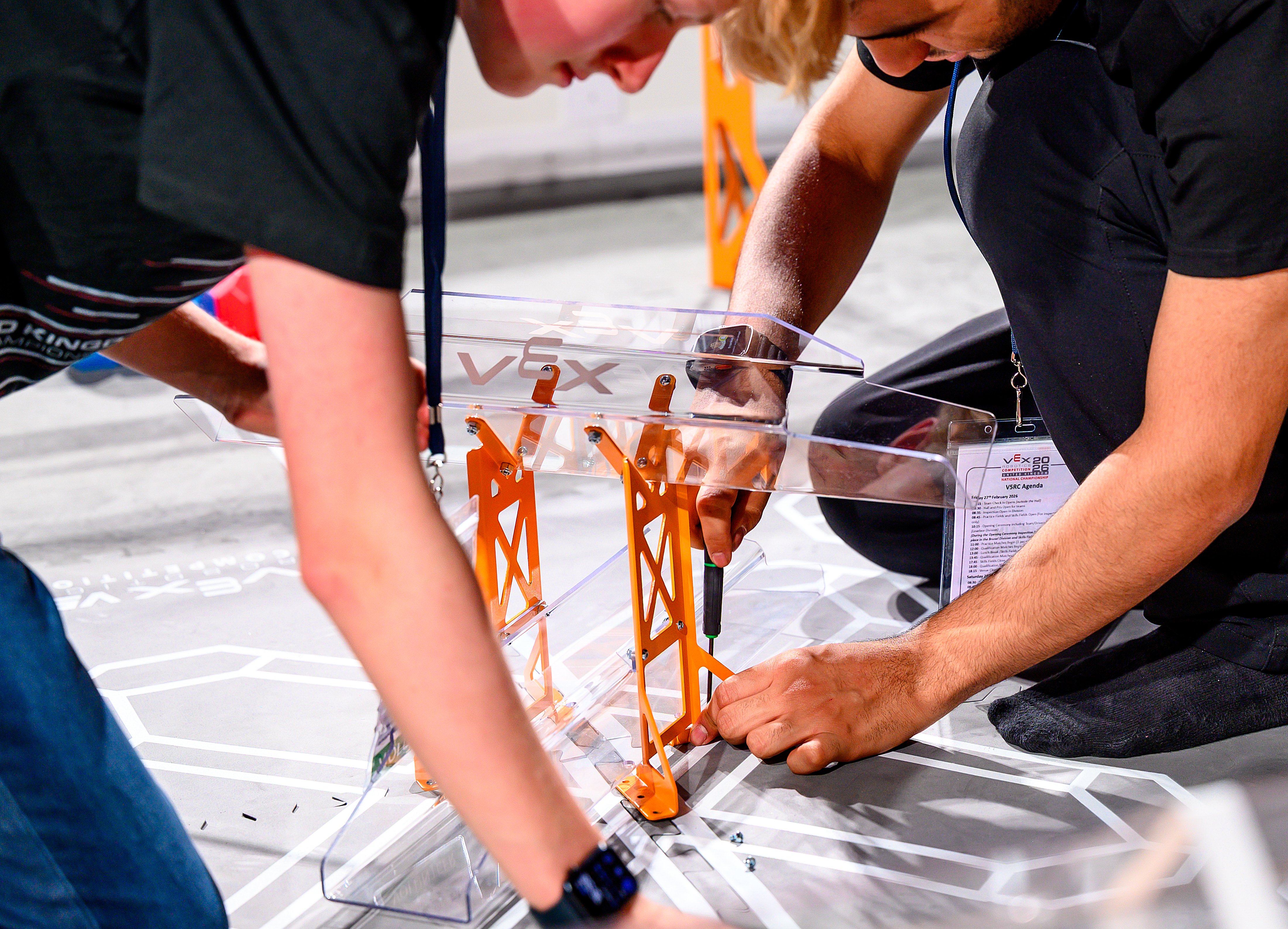
- Fields and field elements first. Count elements as they go into bins. A missing piece is far easier to find while it is still in this room than the week before your next event. Your Head Referee is a good point person to put in charge of field breakdown.
- Technology comes down at the same time. Your event software operator is the best person to head this up, and they already know what is plugged into what. Ask them to organize disconnecting laptops, displays, and field control while the fields come apart around them.
- Pits and signage can be taken down and stored once the fields are clear. Tell whoever helps here which signs to save and where they go.
- The room back to how you found it. Tables and chairs stacked, trash handled, floors clear, so that when you leave and lock up, things are as you agreed they would be. Taking care of your venue makes it much more likely you can use it again for a future event.
- Borrowed equipment returned to whoever lent it, in the condition and on the timeline you agreed to when you borrowed it.
- Lost property collected, with a plan for getting it back to people. Announce where it is before teams leave.
Within 48 Hours: Upload Your Results
Event results must be uploaded within 48 hours of event completion. This is a qualifying criterion rather than a courtesy, and it sits in Event Qualifying Criteria alongside the other requirements your event had to meet. Doing it early leaves time to fix anything that goes wrong.
What you upload is the official record of the day:
- Final rankings and match results
- Robot Skills scores for every team that took an attempt
- Award winners, including judged awards
Teams cannot act on results you have not posted. Robot Skills scores feed the World Skills Standings, which Championship Events can use to fill open spots, and a qualifying spot earned at your event only becomes real once the results are official.
After uploading, check your event page on events.vex.com and look at it the way a team would. Confirm the results are there and the award winners are right. If something is missing or wrong, your Program Support Team can help sort it out. The mechanics of the upload are covered in a later chapter.
If you opened a Team Conduct Report during the event, it is due within 72 hours of the event’s final day, even if no action was taken. Reporting a Code of Conduct Concern at an Event has the full timeline.
Within a Week: Say Thank You
Thank your volunteers, teams, and coaches within a week, while they still remember the day. A specific detail helps: the close finals match, the Queuer who kept things moving after lunch. Thank your venue contact and custodial staff too, and let them know about anything that needs attention.
Ask for feedback if you want it. Feedback is optional, but many Event Partners find it useful while they are learning. If you ask, keep it to two or three open questions, plus one about volunteering again, like:
- What went well for your team/volunteer role?
- Is there anything that would have made your day easier?
- Would you be open to volunteering at a future event?
Before Your Next Event: Review What Happened
This last step does two jobs: it closes out the event you just ran, and it hands your future self the notes that make the next event easier to plan. Both depend on doing it while the day is fresh in your mind. Later, you may remember that queuing got tangled, but not where or why. Give yourself twenty minutes to note what went well alongside what did not — repeating what worked helps a second event go more smoothly than a first. Consider these five areas:
- Your schedule. Note where the day ran ahead or behind, and how much of your buffer you actually used.
- Next time, set your block lengths and buffer from what happened rather than what you planned.
- Your volunteers. Note which posts were comfortable, which felt thin, and who you would want back.
- Next time, adjust your staffing plan and invite your returning volunteers first.
- Your teams. Note what teams asked you about more than once.
- Next time, answer those questions in your pre-event communications or your signage.
- Your budget. Compare what you projected in the Event Partner Budget Planner against what actually happened, and work out your real cost per team.
- Next time, set your event's size, registration fee, and spending from that number.
- Your venue. Note what the venue made easy and where it fought you — power, parking, load-in, noise, room to queue.
- Next time, decide whether to rebook it, and what to ask for differently if you do.
Then share your thoughts with your Program Support Team. They see a lot of events and can offer perspective and strategies for anything you want to change. That conversation can also be the easiest way to start planning your next event. Your first event is the hard one — you have now made every one of these decisions once, and many of them will carry over.