


Chapter 6: Robot Interaction and Judgment Calls
Introduction

The previous chapters walked through how a match is set up, scored, and run. This chapter turns to the calls that come up once two robots are moving on the same field: how a Head Referee distinguishes expected gameplay from a rule violation, and how robots are handled fairly when a match doesn't go smoothly.
VEX IQ Robotics Competitions are cooperative games. The two robots in an alliance work toward the same score, so there is no opponent to defend against and no contact aimed at stopping another team. Most of what you are watching for, then, is not one robot interfering with another. It is whether a robot stays within the field's size and boundary rules, whether any contact or damage was accidental, and when a team may legally step in to handle their own robot.
The standard throughout is student-centered: student safety and learning come first. When a situation is genuinely unclear, the benefit of the doubt goes to the team, and only repeated or clearly intentional actions rise to a violation. Your job is to apply that standard the same way from one match to the next.
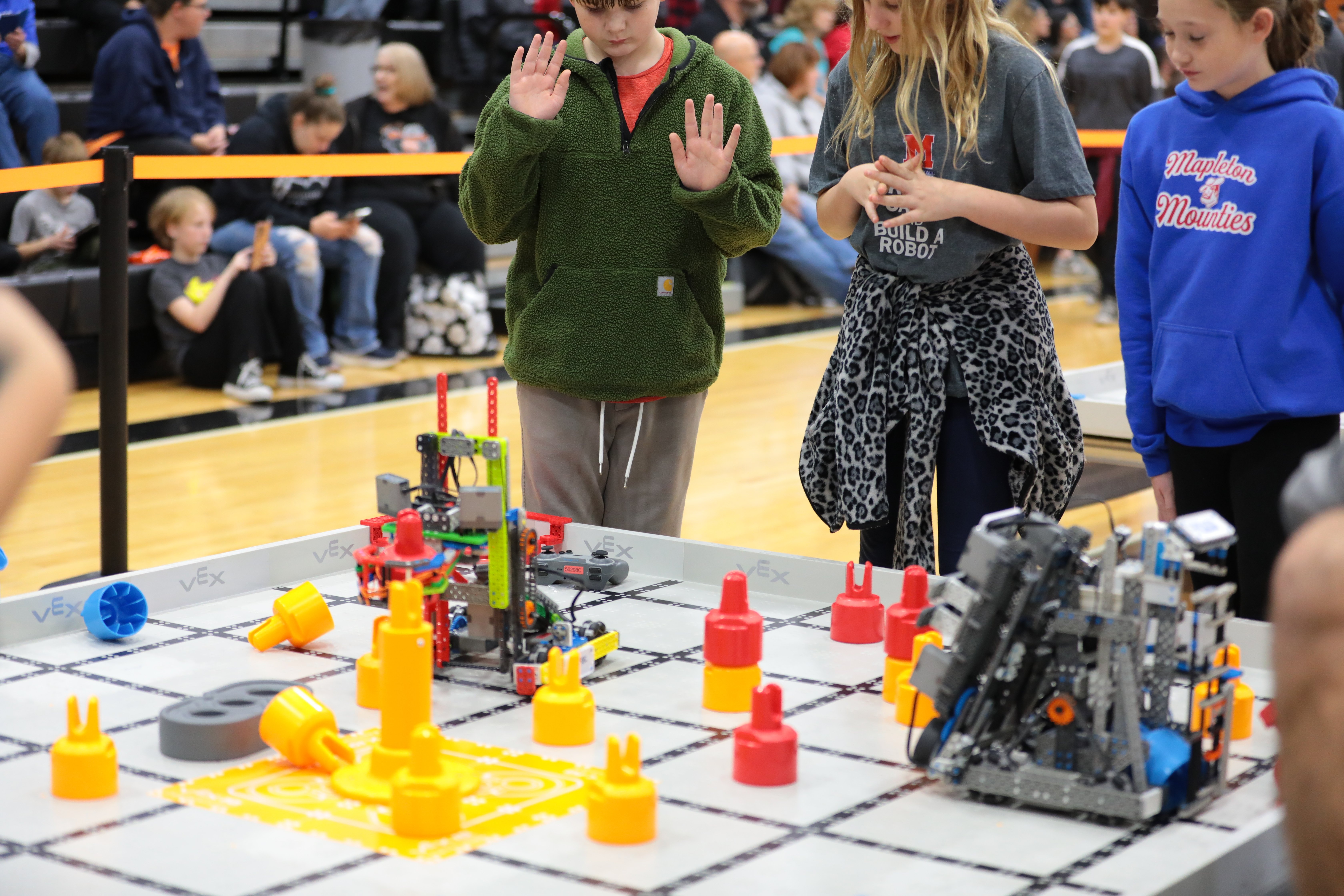
The time to complete this chapter is approximately 30 minutes.
In This Chapter
This chapter covers the two areas where a Head Referee most often exercises judgment during Level Up match play. The first is expansion, field boundaries, and the difference between incidental contact or damage and an action that requires a ruling. The second is when and how a robot may be handled or reset during a match, including the differences that apply during an Autonomous Coding Skills Match.
As in earlier chapters, the Game Manual remains your official source for exact criteria. This chapter points you to the rules that apply, but it does not replace reading them.