


Chapter 1: Referee Foundations
Lesson 2: Event and Match Structure

Learning Objectives:
- Identify the basic structure of a VEX IQ Robotics Competition event.
- Identify the basic structure of a Teamwork Match.
- Describe the referee's responsibilities before, during, and after a match.
Understanding the structure of an event helps referees support match flow, communicate with volunteers, evaluate scoring at the right times, and keep the field moving from setup through reset.
VEX IQ Robotics Competition Event Structure
A VEX IQ competition event usually includes several connected parts in addition to Teamwork Matches. Each of these elements is explained in the table below with a description of what happens and how referees support that part of the event. Each event may have slight variations, so be sure to check with the Event Partner for event-specific procedures.
| Events | Description | Referee Roles |
|---|---|---|
| Team Check-In and Inspection | Teams arrive, check in, and complete robot inspection to confirm that their robots meet the rules and are ready to compete. | While other inspectors may manage this process, Head Referees should be ready to assist and help answer rule questions related to robot legality. |
| Driver Meeting | Teams and event staff review key expectations before match play begins. | Head Referees often lead this meeting and can use this time to highlight important rules, points of emphasis, event-specific procedures, and recent official Q&A clarifications. |
| Qualification Matches | Teams compete in scheduled Teamwork Matches with a randomly assigned alliance partner. | Referees support match flow, observe gameplay, evaluate scoring, and apply procedures consistently from match to match. Scorekeeper Referees focus on scoring and observations, while the Head Referee makes final gameplay rulings. |
| Robot Skills Matches | Teams may compete in Driving Skills and Autonomous Coding Skills Matches to earn scores separate from Teamwork rankings. | Scorekeeper Referees often support Robot Skills fields by confirming setup, monitoring match procedures, recording scores, and handling Skills Stop Time procedures when applicable. Robot Skills Matches will be covered in Chapter 3. |
| Finals Matches | The top-ranked teams form alliances and compete to determine the Teamwork Champions. | Referees should continue applying the same scoring procedures, communication expectations, and rule standards used during Qualification Matches. |
| Awards | The event concludes with judged and performance awards. | Referees are not responsible for judged awards, but may be asked by the Event Partner to help with event wrap-up or award presentation. |
While most of an event day will be centered around match play, referees have other responsibilities as well. The Head Referee often leads the Driver Meeting, in collaboration with the Event Partner and other volunteers, to let teams know about expectations and the organization of the event. Head Referees should be prepared with a brief agenda. Some examples include:
- The agenda for the day or event (timing for practice fields opening, etc.)
- Additional logistics that may need to be shared (location of the bathrooms, where food can/cannot be consumed onsite, etc.)
- Any recent updates to the Game Manual or Q&A that will be points of emphasis during matches
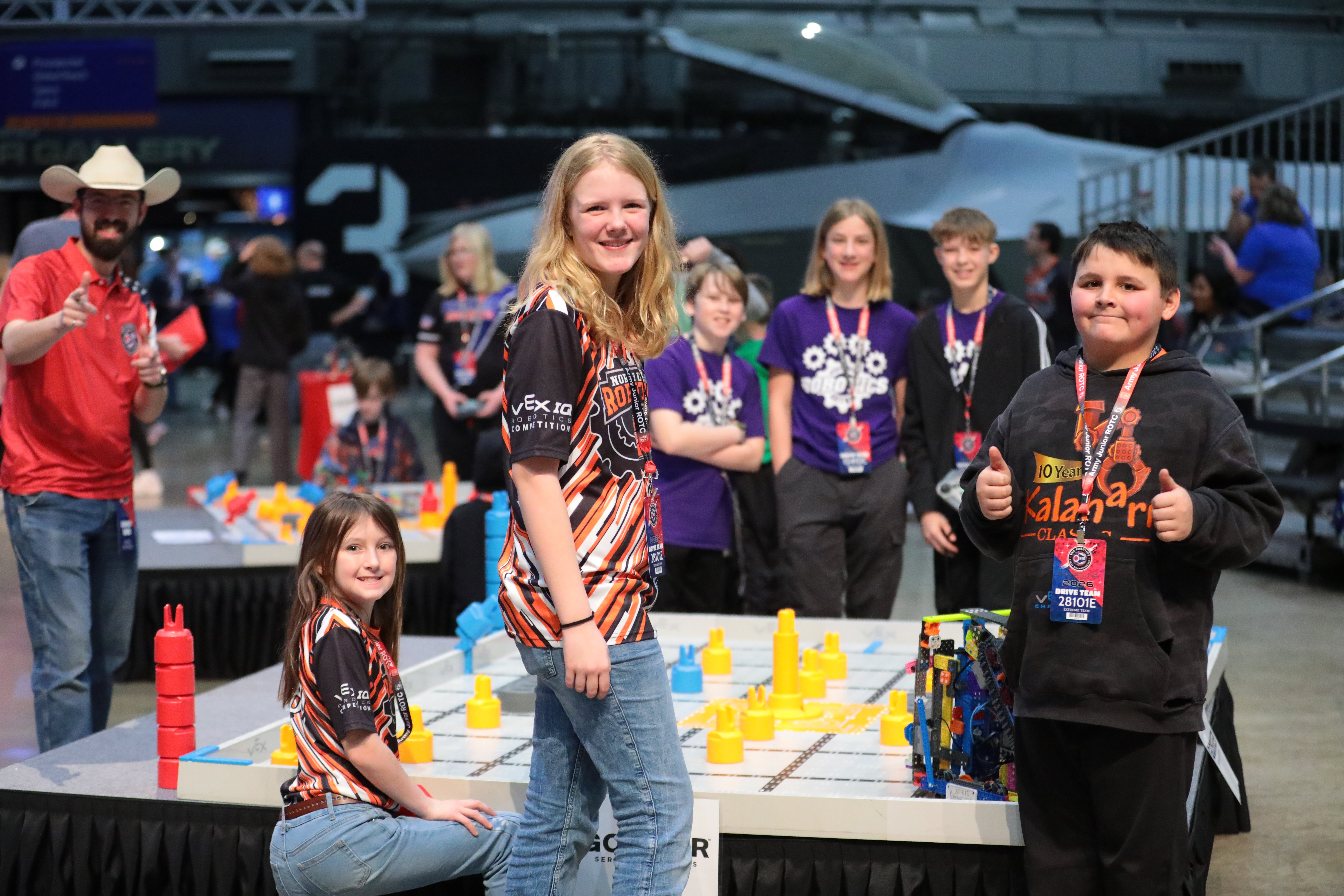
Unlike some other VEX Robotics Competition programs, VEX IQ does not use a draft-style Alliance Selection. Instead, Finals Alliances are formed automatically based on team rankings after all Qualification Matches: the first- and second-ranked teams form an alliance, the third- and fourth-ranked teams form an alliance, and so on. Because teams are ranked by their average Qualification Match score, every match a team plays contributes to whether they reach the Finals.
VEX IQ Robotics Competition Match Structure
Match play happens during Teamwork Matches. In a Teamwork Match, two teams form an alliance and work together on the same field. There is no opposing alliance to play against. Both teams share the same goal: earning the highest combined score they can before time runs out.
A Teamwork Match lasts one minute (1:00) and is entirely Driver Controlled. There is no Autonomous Period in a Teamwork Match. Each team may send up to three Drive Team Members to their Driver Station: two Drivers and one Loader. Adults who are not event staff are not permitted in the Driver Station.
One feature of a Teamwork Match that referees should watch for closely is the mid-match Driver switch. Each team's two Drivers must switch controllers partway through the match, between 35 seconds (0:35) and 25 seconds (0:25) remaining on the Match timer. In effect, the first Driver operates the robot for roughly the first half of the match, and the second Driver operates it for the rest. No single Driver may operate a robot for more than 35 seconds, the second Driver may not touch the controls until the controller is passed, and the first Driver may not touch the controls afterward.
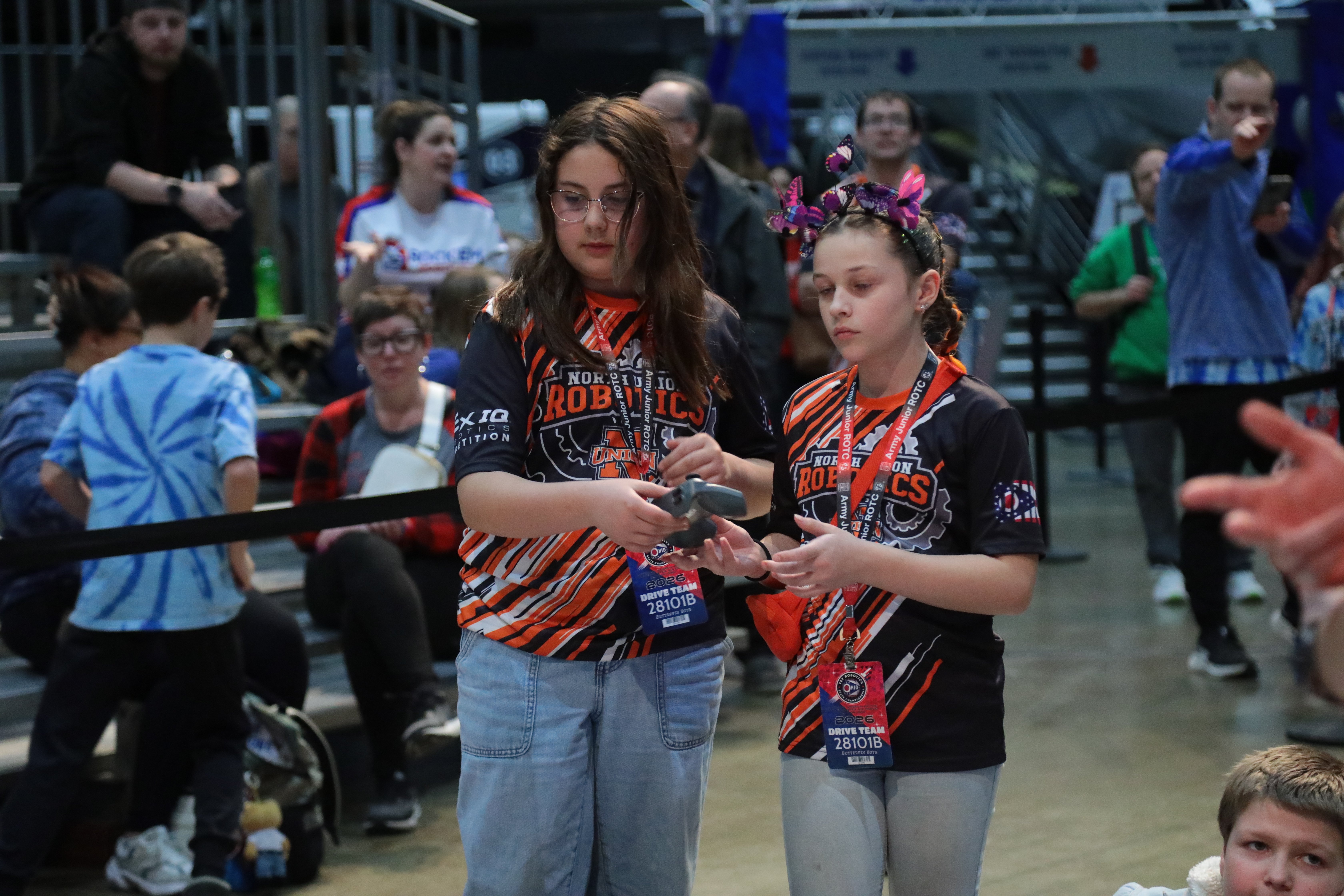
All referees should understand the timing and purpose of a Teamwork Match so they can watch for scoring actions, the Driver switch, field conditions, and possible rule concerns. Scorekeeper Referees use this information to support accurate scoring and share relevant observations. Head Referees use this information when making final rulings and resolving gameplay questions.
Before a Match
Before the match begins, the referee team confirms that the field and robots are ready. This may include checking that:
- The field is set correctly
- Robots are in legal starting positions
- Each robot has its Preload (one yellow Bean Bag)
- Drive Team Members are in the correct Driver Station
- Teams are ready to begin the match
Scorekeeper Referees may help check setup, observe robot and field readiness, and alert the Head Referee to possible concerns. The Head Referee is responsible for resolving questions about legal starting positions, Preloads, field setup concerns, or whether a match should begin. The goal before a match is to be both efficient and accurate: help keep matches moving while still allowing necessary checks to be completed.
During a Match
During the match, all referees observe gameplay from their assigned positions. Scorekeeper Referees watch for scoring actions, the Driver switch, field conditions, and possible rule concerns that may need to be brought to the Head Referee's attention.
The Head Referee observes gameplay and makes rule enforcement decisions. This includes watching for scoring actions, loading, robot handling, safety concerns, and possible rule violations. The Head Referee may communicate with teams during the match when needed. Clear verbal warnings and counts help teams understand when a possible violation is happening and may help them take action before further escalation occurs. Good communication during a match keeps the full referee team aware of what is happening on the field without creating confusion for teams.
After a Match
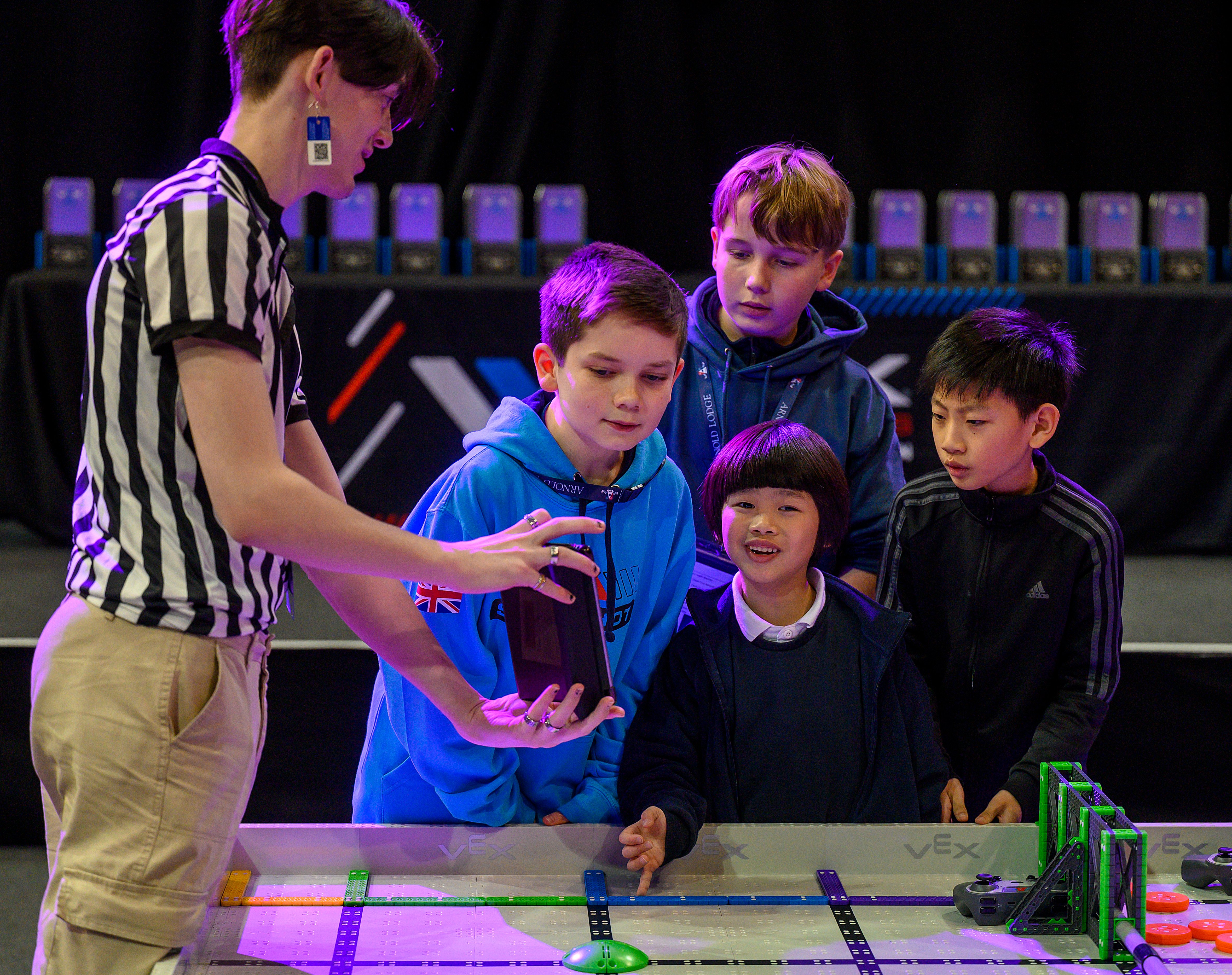
After the match ends, scoring statuses are evaluated once all scoring objects, field elements, and robots on the field have come to rest. Scores are evaluated visually by the Head Referee, with Scorekeeper Referees recording results once they are confirmed.
Referees should avoid contacting or moving robots and scoring objects while evaluating scoring statuses. If an object must be moved to evaluate the status of another object, its status must be agreed upon by all teams and the Head Referee and recorded before it is moved.
Only Drive Team Members, not adults, may raise a scoring or ruling question with the Head Referee, and they must do so right after the match before leaving the field. If a ruling or scoring question depends on the final position of robots or scoring objects, the field should not be reset until the question has been resolved. Once scoring and rulings are complete, the referee team gives the all-clear for teams to retrieve their robots and for field reset volunteers to prepare for the next match.