


Chapter 1: Judging Foundations
Lesson 1: Judging and Awards in VEX Robotics Competitions

Learning Objectives
- Explain the purpose of judging in VEX Robotics Competitions.
- Identify the two principles of student-centered work that judging listens for: that students do the work, and that students can explain the work.
- Identify the categories of awards presented at a competition event and which of them judges select.
- Identify where to find the full criteria for each award.
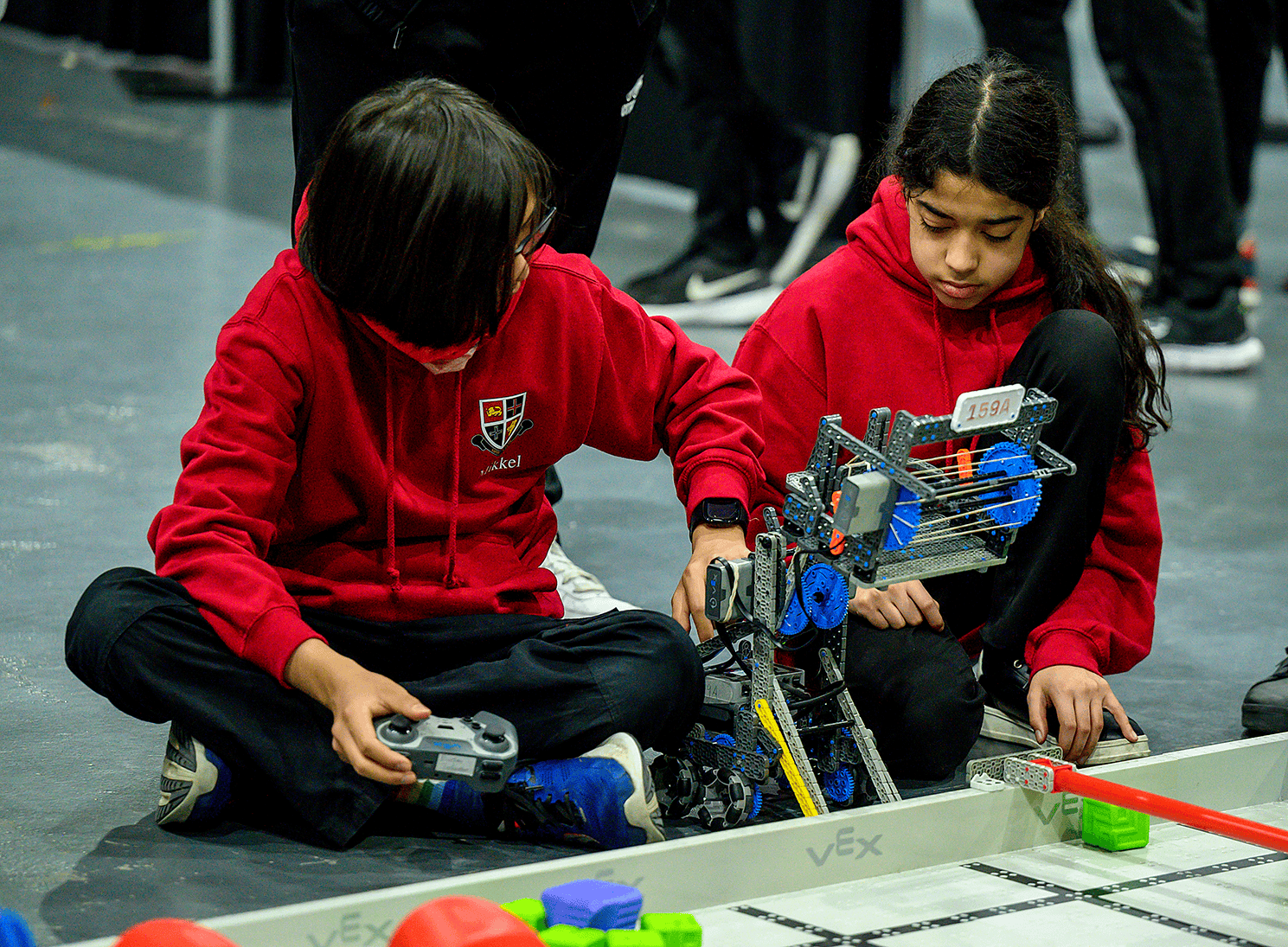
In VEX Robotics Competitions, student teams design, build, code, and drive their own robots to play a game that changes every season. The competitions serve students from elementary school through college, so the students you meet may be as young as eight or as old as university age depending on the program and level you are judging. Teams compete in matches against other teams, take on the Robot Skills Challenge, and document their season in an Engineering Notebook as they go. A season runs from the release of a new game through local events and championships, and teams spend that time refining one robot rather than starting over. Students do the work at every stage, from the first sketch to the last driving practice, and they are the ones who can explain how their robot works and why they built it that way. That is what you are there to see.
Why Judging Exists
A competition match shows how a robot performed. It does not show who designed it, what the team tried before this version worked, or what the students learned getting there. Judging is how an event sees that work.
The goal of judging is to recognize teams that best demonstrate the values and award criteria of the program, while ensuring every team is treated with respect and consistency. That recognition is broad. Judging honors what a team learned across a season, the progress it made from one idea to the next, the record it kept of that work, and the creativity and spirit it brought to the event. These are real accomplishments. At the award ceremony these Judged Awards sit alongside the Performance Awards, not beneath them.
Judges draw on three sources of evidence to understand and evaluate a team’s progress through the season: a team's Engineering Notebook, a Team Interview, and what judges observe at the event. Later chapters cover each one in detail.
What Judging Listens For
Judging looks at the work produced by students. The Student-Centered Policy sets the standard for work that belongs to the students. It rests on two principles:
- Students do the work. The robot, code, notebook, strategy, and the decisions behind them are the team's. Deciding is the most important work a team does.
- Students can explain the work. Someone on the team can speak to every part, though no one student has to explain all of it.
Almost everything that happens in judging comes back to these two principles. When you read an Engineering Notebook, you are looking for evidence that the students made the decisions. When you talk with a team, you are listening for whether they can explain what they did and why.
Adults are part of a team's season. Coaches, teachers, and mentors teach, advise, and support students throughout the year, and that is expected. What matters is whether the work stayed in the students' hands.
Teams are not left to guess where that line falls. The Student-Centered Policy includes several short checks that teams use to test their own work, the help they received, and ideas they took from outside sources. While you do not score teams against these checks, you can use them as a resource if questions arise.

Awards at a Competition Event
Event Partners, the people who organize and put on a competition event, decide which awards their event will offer. They share that list with the Judge Advisor before judging begins. Neither judges nor Judge Advisors choose which awards an event offers. The judging team decides which teams receive the ones on the list.
Awards fall into four categories:
- Performance Awards are earned through gameplay. They are determined by match results and Robot Skills rankings and are presented at every tournament. Judges are not involved in these awards.
- Judged Awards are selected by judges through Team Interviews, Engineering Notebook evaluations, and event observations. These are the awards judges are at the event to decide.
- Nominated Awards are optional and may be offered at judged and non-judged events alike. Judges and other event volunteers, such as the Head Referee or an Emcee, can nominate teams for them.
- Recognition Awards are optional and honor the adults and organizations who support teams. The Event Partner determines these awards; judges do not.
A team may earn only one Judged Award per event, but may also earn Performance and Nominated Awards.

Where to Find Award Criteria
When you arrive at an event as a judge, you will be provided with the list of awards to be given and the criteria that go with each award. No one needs to memorize award criteria, but it can be good to understand where to find this information if you want the additional context before judging your first competition.
The Global Robotics and Science Foundation Library provides the reference for the full criteria of every Judged and Nominated Award in this article, Award Descriptions, as well as in a printable format for easy reference during deliberations. The article offers an at-a-glance table of what each award recognizes, then gives the complete criteria for each one, including which awards require a team to submit an Engineering Notebook.
As a judge, you will work with the criteria in front of you alongside the tools to help you make the final award decisions. Your Judge Advisor will be there to help you understand the different criteria and guide your judging team through the deliberation process.