


Chapter 4: Robot Inspection
Lesson 1: Inspection Foundations

Learning Objectives:
- Explain why a robot must pass inspection before it competes.
- Describe the Head Referee's role in the inspection process.
- Identify the categories of robot rules checked during inspection.
- Distinguish between objective rules and the few rules that require judgment.
- Identify the official resources used to support inspection decisions.
This lesson covers what inspection is, why a robot must pass it, who runs it, and what it checks.
Before continuing, read Section 4 – Inspection Rules in the current Game Manual.
Why Inspection Matters
Rule <R2> requires every robot to pass a full inspection before it is cleared to compete. A robot that has not passed inspection may not play in any match. Inspection protects fair competition: it confirms that each robot follows the same construction rules before it ever reaches the Field.
The Head Referee's Role in Inspection
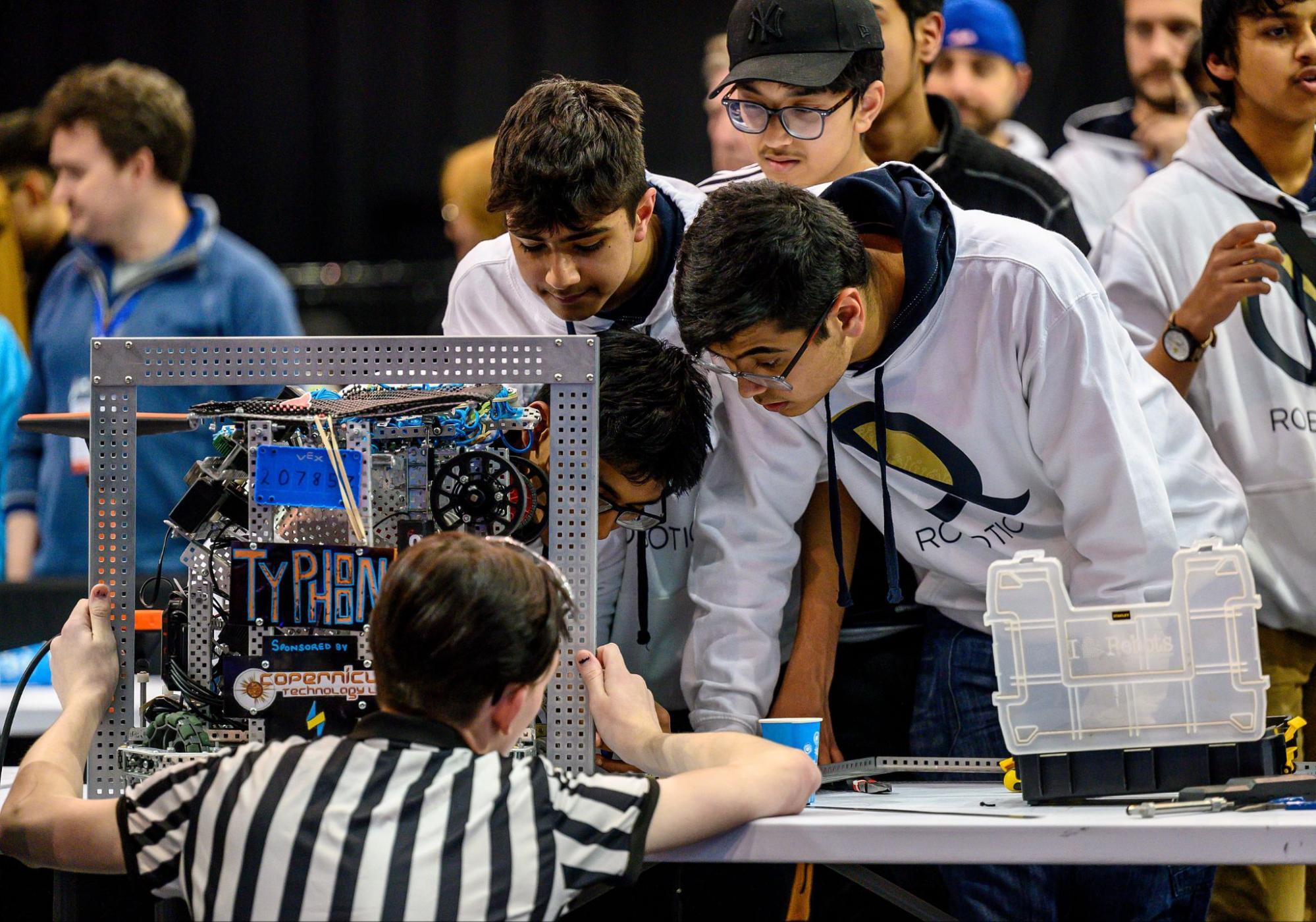
Inspectors carry out inspections by working through the checklist with a team. The Head Referee is the final decision-maker on whether a robot is legal. In practice:
- Inspectors run the checklist, verify each item, and clear robots that pass.
- The Head Referee answers rule questions inspectors cannot resolve, makes the final call on any disputed item, and retains authority over robot legality throughout the event.
At a small event, the Head Referee may perform inspections directly. At a larger event with several inspectors, the Head Referee acts as the backstop for difficult or contested decisions.
What Inspection Covers
The inspection checklist is organized around the robot rules in Section 4 (Inspection Rules) of the Game Manual. The main categories are:
- The robot – one robot per team, robot has License Plates, no hazards or detachable parts.
- Size – starting volume and expansion limits.
- Electronics – Brain, battery, radio, controllers, motor limits.
- Components and materials – legal parts, fasteners, tape, and allowed non-VEX items.
- Pneumatics and custom plastic – limits on air tanks and custom plastic.
- Sensors – identifying sensors affected by field lighting.
- Team verification – the team's confirmation that the robot and team meet event expectations.
Inspection Is Meant to Be Objective
Most checklist items are pass-or-fail and can be confirmed directly: a robot has one Brain or it does not; it fits the sizing tool or it does not. Inspection should be treated as cut-and-dry wherever possible.
A small number of items call for judgment, such as whether a part is an entanglement hazard or is intended to damage other robots. When an item is not clear-cut, the inspector brings it to the Head Referee, who makes the final ruling. Keeping judgment calls with the Head Referee is what keeps inspection consistent across every team.