


Behind the Scenes of Hands-On Learning: The 2026 VEX Robotics Educators Conference
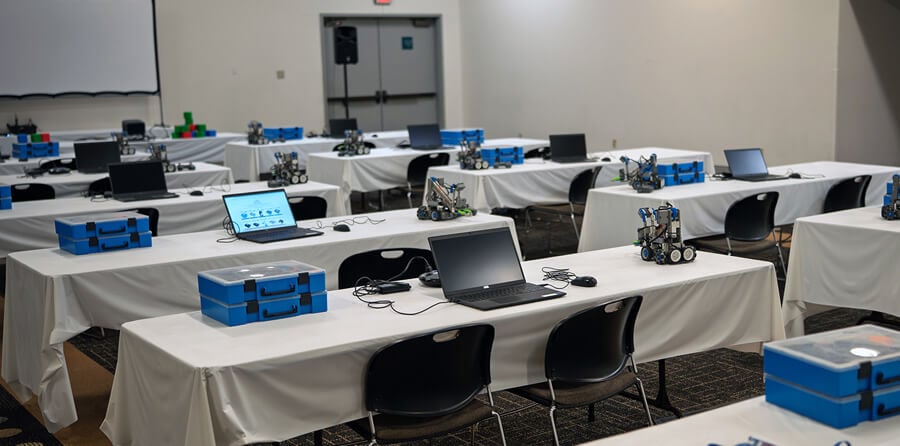
Several days before the 2026 VEX Robotics Educators Conference officially began, the convention center already felt busy. Cases of robots moved through hallways, batteries charged in long rows overnight, workshop materials were sorted into piles across tables, and signs appeared on the walls listing what needed to be ready each morning. Throughout the space, teams of people were building robots, labeling controllers, updating firmware, organizing kits, and checking that every workshop would have exactly what educators needed when they walked through the door.
From the outside, conference attendees see the finished experience: hands-on workshops, organized materials, robots ready to use, and learning spaces designed for exploration. But behind each of those experiences are systems. Behind the literal curtains in each workshop room, small routines and organizational strategies were working quietly in the background to help everything run smoothly.

As we prepared for the conference, I kept thinking about how familiar many of these processes felt. While the scale may have been different, the work itself mirrored what teachers do every year in their classrooms: preparing materials before students arrive, creating routines that reduce friction during instruction, resetting spaces between activities, and packing everything away in ways that make future learning easier. The more I reflected on it, the more I realized that conference preparation and classroom organization are really built around the same goal: creating systems that make hands-on learning easier to sustain and easier for more people to participate in successfully. In this article, I’ll share some of the behind-the-scenes strategies we used while preparing for the conference, along with ways those same ideas can support organization and learning throughout the school year.
Before the Conference: Start the Year Ready
Before conference attendees ever entered a workshop room, a great deal of preparation had already happened behind the scenes. During prep days, robots across multiple platforms were built, firmware was updated, controllers were paired, and nearly everything was labeled. Controllers were nested directly onto their robots so each pair stayed together throughout the conference, reducing confusion during setup and transitions between workshops.

As we worked through these tasks, I kept thinking about how similar the process felt to the start of a school year. Beginning-of-year setup work often feels tedious in the moment, but those systems quietly support learning all year long. Labeling kits and robots, pairing controllers consistently, and updating firmware before students arrive all help reduce friction later. Those small systems allow students to spend more time building, coding, and exploring instead of troubleshooting logistics. Just as importantly, they make it easier for students to participate more independently because the systems themselves provide support.
One of the most effective systems we used was also one of the simplest: large handwritten posters within each of the workshop staging areas. These signs listed the sessions for each day and what materials needed to be ready for each workshop. Because the information was visible, anyone helping with setup could quickly step in and lend a hand without needing to be told what to do. Often, even when people want to help, one person still ends up holding all of the information. In classrooms, teachers can unintentionally become the keeper of every routine, process, and material location, which means students and helpers still rely on them for every next step. Visible systems help share that responsibility, making it easier for everyone to participate more independently. The goal was never just to stay organized. It was to create an environment where more people could step in, contribute, and help learning keep moving.
Ideas to Try in Your Classroom
- Update firmware before students begin using their robots or kits. Students can help with this process as well.
- Label robots, controllers, batteries, and kits consistently. This doesn’t have to be fancy—tape and a permanent marker work wonders!
- Store paired devices together. This can reduce transition time and make materials easier for students to manage independently.
- Use visible schedules or setup checklists so students can help independently. Taking these items out of your brain and making them visible enables others to help more productively, and reinforces student agency in their learning. This also helps maintain routines and systems if and when you are not there in person.
- Build systems that multiple people can understand and maintain. Shared systems make participation easier for everyone, not just the person leading the room. The simpler the system, the easier it is to sustain.
During the Conference: Keep Learning Moving
Once the conference began, the pace shifted quickly. Workshop rooms that were full of one group of educators during a morning session needed to be reset and ready for an entirely different workshop several times throughout the day, often with very quick turnaround times. Robots moved on and off tables, batteries rotated through chargers overnight, materials were restaged between workshops, and laptops and tables that had just been used for one activity were quickly transformed for the next.
Even with all of that movement, one thing stayed remarkably consistent: the systems. Robot and controller pairs stayed together throughout the conference, often nested directly on top of one another so they could easily be carried, distributed, and returned as a complete set. At the end of each day, batteries were placed on chargers in designated areas, then returned to the correct robots and workshop spaces the next morning. Materials were reset based on the next day’s workshop schedule so each room was ready before educators arrived the following morning.

What stood out to me during the conference was how much that intentional resetting mattered. It would have been easy to think of resetting spaces as “cleanup,” but it was really preparation for the next learning experience. Every robot returned to its proper place, every charged battery, and every reorganized kit helped ensure that the next group of educators could walk in and begin learning immediately instead of troubleshooting missing materials or incomplete setups.
The same thing is true in classrooms. Reset routines are often treated as something separate from instruction, but in reality, they are part of what makes instruction possible. A classroom where materials are consistently returned, devices are charged, and spaces are reset creates smoother transitions and makes it easier for students to participate independently. The goal is not simply to keep things tidy. It is to create systems that protect learning time and make hands-on learning easier to access for everyone who enters the room next.
One of the most effective parts of the conference reset process was that it did not rely on a single person remembering every detail. Because materials were consistently organized and expectations were visible, anyone helping could step into the process and know what “ready” looked like. In many classrooms, teachers carry the mental responsibility of every transition, every material, and every routine. Shared systems help distribute that responsibility so students and helpers can take a more active role in maintaining the learning environment. While establishing the systems may take time initially, that preparation will make things faster in the long run.
Ideas to Try in Your Classroom
- Keep robot and controller pairs stored together. This helps students quickly identify which set is “theirs” and return materials as complete sets.
- Create a consistent charging routine for batteries and devices. Assign students classroom jobs that help maintain the system, while also making sure everyone understands safe charging practices.
- Think of resetting spaces as preparation for future learning, not just cleanup. Build reset time directly into lessons so students share responsibility for maintaining the learning environment, instead of cleanup becoming only the teacher’s job.
- Make expectations for “ready” visible. Use checklists, labels, or posted routines so everyone understands what needs to be completed and how to do it.
- Use storage systems that make missing materials easy to spot at a glance. You can also try a “lost and found bin” where students can place loose items and look when something is missing. Items will likely go missing from time to time, so planning ahead for that can save time and energy later.
- Create classroom routines that students can help maintain independently. Shared systems reduce the amount of information that only lives with the teacher.
After the Conference: Organize for Future You
By the final afternoon of the conference, the energy in the workshop spaces had shifted again. Tables that had been full of robots and educators only hours earlier were now being cleared. Batteries came off chargers for the last time, robots were packed into cases, signage was rolled up, and materials that had stayed in constant motion throughout the conference finally settled.
At that point, it would have been very easy to simply put everything into boxes and move on. Everyone was tired, and after several days of workshops, conversations, troubleshooting, and resetting rooms, the temptation to “deal with it later” was definitely there. But instead of treating teardown as the end of the process, we treated it as preparation for the next one.

As materials were packed, detailed inventories were created so that when we unpack everything again next year, we would know exactly what was inside each case. Boxes were carefully labeled, batteries were removed and packed separately from built robots, and platforms like VEX GO and VEX 123 were reorganized back into complete bundles. Missing or extra pieces were noted so replacements could be ordered later. The goal was not simply to put materials away. It was to make future setup easier, faster, and more accessible.
What stood out to me most during teardown was that it was not just the workshop leaders packing things away. Everyone who had helped make the conference possible also helped with cleanup and organization. Because the systems were visible and shared, people could step in where needed without relying on a small group to hold all of the responsibility. That shared effort reduced both the physical work and the mental load of keeping track of where everything belonged.

The same thing can happen in classrooms. End-of-year cleanup is often treated as something teachers need to survive before summer break begins, but it can also be an opportunity to involve students in maintaining and preparing their learning environment. When students help inventory kits, reorganize materials, or rebuild complete robot sets, they are contributing to something bigger than the current moment. They may not be the students using those exact kits next year, but their effort still helps create a smoother learning experience for the students who come next.
There is something meaningful about that kind of shared responsibility. In the same way that visible systems during the conference made it easier for more people to participate in setup and reset, involving students in classroom organization helps them see that maintaining a learning space is not just the teacher’s job. It is part of participating in a learning community. The goal is not perfection, nor is it simply putting materials away for the sake of being organized. It is about creating systems that make future learning easier to access, both for yourself and for others.
Ideas to Try in Your Classroom
- Create a simple inventory system before storing materials for the summer. A spreadsheet, checklist, or even handwritten notes can make setup much easier later.
- Label boxes and storage bins clearly. Note both the platform and what is inside, along with anything is missing. Try to create complete kits before storing them. Separating “extras” or using the spare parts bin to fill in incomplete kits makes it easier to identify what you are actually missing.
- Keep a running list of replacement parts or materials that need to be reordered. Making a list now saves you from relying on memory months later and gives you time to replace parts over the summer.
- Remove batteries from devices before long-term storage. Be sure to store them according to recommended battery guidelines.
- Involve students in organizing and inventorying materials at the end of projects or the school year. Shared systems reduce the amount of responsibility that only lives with the teacher and reinforce the idea that everyone is part of the same learning community.
- Give students specific organizational tasks. Things like rebuilding kits, checking inventories, or labeling storage bins, enable everyone to contribute meaningfully to maintaining the learning environment.
Behind every hands-on learning experience is a system quietly supporting it. Whether it is labeled kits, shared reset routines, visible schedules, or students helping inventory materials, these small systems do more than keep spaces organized. They create shared access to learning, making it easier for more people to participate meaningfully and independently.
You do not need to redesign your entire classroom overnight to make a difference. Start with one visible system, one shared routine, or one way to involve students more intentionally in maintaining the learning environment. Small changes now can make future learning smoother, more accessible, and more sustainable for everyone involved.
Share your systems that support learning in the PD+ Community, or schedule a 1-on-1 Session for individualized support to help you build a system for your setting.